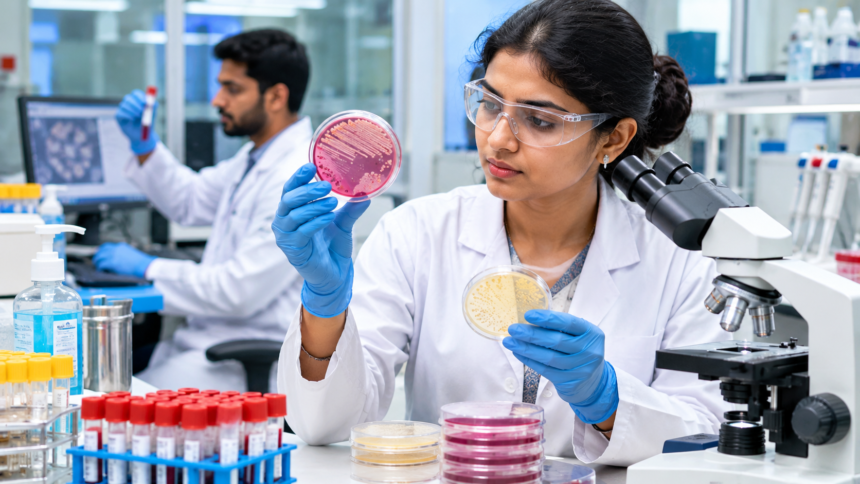
India has stepped up its efforts to tackle antimicrobial resistance (AMR), a growing public health challenge that makes infections increasingly difficult to treat. The Union Health Ministry has inaugurated the national observance of World Antimicrobial Resistance Awareness Week 2026, which runs from November 18 to 24.
This year’s theme is “One Health, One Action: Prevent AMR Now”, highlighting the need for coordinated action across human healthcare, animals, agriculture and the environment.
Why Antimicrobial Resistance Is a Growing Concern
Antimicrobial resistance develops when bacteria, viruses, fungi or parasites become less responsive to medicines designed to control them. As a result, infections can become harder to treat and may require more complex medical care.
The unnecessary or inappropriate use of antimicrobial medicines is one of the factors contributing to this problem.
India Strengthens Its Prevention Strategy
India’s National Action Plan on AMR 2.0 covers the 2025–2029 period. The programme focuses on improving laboratory facilities, monitoring drug resistance, strengthening infection prevention and promoting responsible use of antimicrobial medicines.
The National Centre for Disease Control is coordinating the country’s AMR containment programme.
Public Awareness Remains Important
Health authorities are encouraging responsible medicine use and stronger infection-control practices. The campaign also highlights the importance of coordination between healthcare professionals, veterinary services, food production systems and environmental agencies.
The initiative aims to reduce the spread of drug-resistant infections and protect the effectiveness of medicines for future generations.