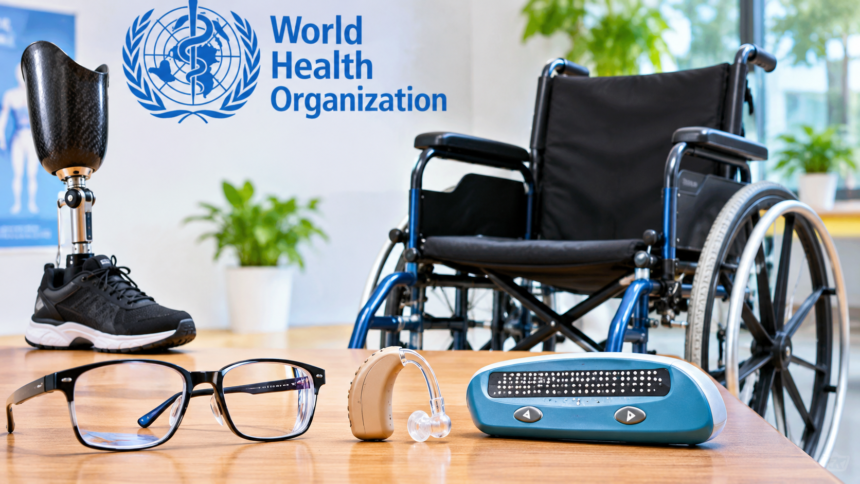
The World Health Organization has urged countries across South-East Asia to improve access to assistive healthcare products, including wheelchairs, hearing aids, spectacles, artificial limbs and communication devices. The organisation says these products are essential for helping people with disabilities and age-related health conditions live more independently.
Billions of People Need Assistive Technology
According to WHO, more than 2.5 billion people worldwide currently need at least one assistive product. This figure could increase to 3.5 billion by 2050 as populations age and non-communicable diseases become more common.
Despite the growing need, nearly one billion people are unable to obtain the products they require. High prices, limited availability and a shortage of trained professionals remain major barriers, particularly in underserved communities.
India Among Countries Taking Action
WHO highlighted progress in countries including India, Bhutan, Nepal and Timor-Leste, which have developed or updated national priority lists for assistive products.
These lists help governments identify essential devices that should receive attention in healthcare planning, budgeting and procurement. WHO’s updated model list for 2026 includes 66 categories of assistive products.
WHO Wants Assistive Devices Included in Healthcare Plans
The organisation has emphasised that preparing a list is not enough. Governments also need to ensure proper funding, reliable supply, trained healthcare workers, maintenance services and timely replacement of devices.
The initiative aims to make assistive technology more affordable and accessible so that people can receive the support they need regardless of their location or financial circumstances.