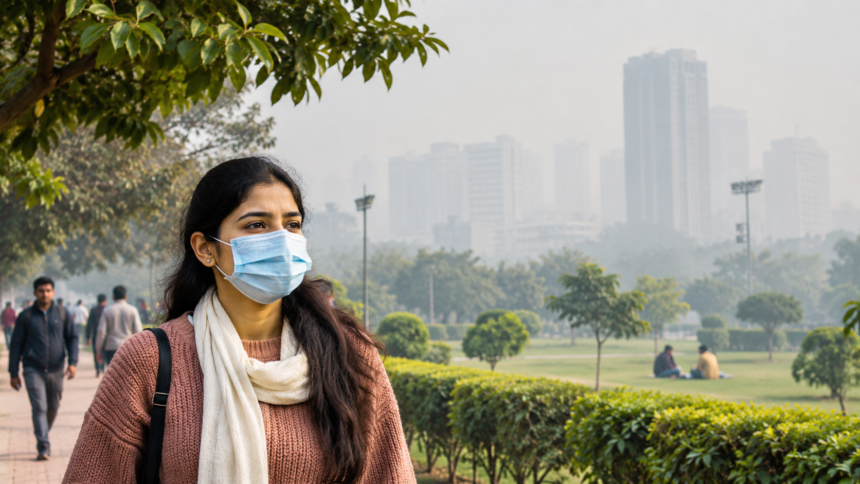
Air pollution is emerging as a much wider public health concern, with Indian research highlighting its possible effects on the heart, brain and overall well-being. A major review of 184 peer-reviewed Indian studies has found that 169 studies reported at least one adverse health association linked to air pollution exposure.
The findings suggest that polluted air should not be considered only a respiratory health problem, as prolonged exposure may affect several organs and body systems.
Pollution Linked to Heart and Blood Pressure Problems
Fine particulate matter, particularly PM2.5, is a major concern because these tiny particles can travel deep into the respiratory system.
Research has associated prolonged exposure to air pollution with high blood pressure, cardiovascular problems and increased hospital admissions for heart-related conditions.
Among 11 studies examining cardiovascular diseases, 10 reported at least one adverse association with air pollution.
Possible Effects on Brain and Mental Health
The research also highlights possible connections between air pollution and mental health conditions, including depression and problems affecting brain development and cognitive functions.
Some studies have examined associations between exposure to pollutants and ADHD, particularly among children and young people.
Researchers believe inflammation and oxidative stress may be among the biological processes involved, although further investigation is needed to understand these relationships fully.
Children and Older People Face Greater Concerns
Children, older adults and people with existing health conditions may be particularly vulnerable to polluted air.
Studies have also reported respiratory complaints and reduced lung function among outdoor workers, including street vendors and sanitation workers who spend long periods exposed to polluted environments.
Indoor pollution from solid cooking fuels has also emerged as an important concern.
Stronger Pollution Control and Awareness Needed
The review highlights the importance of improving air-quality monitoring, strengthening industrial emission controls and reducing pollution from household fuels.
Experts also emphasise protecting vulnerable groups and spreading awareness about the health effects of polluted air.
The findings underline an important message: cleaner air is essential not only for healthy breathing but also for protecting heart health, brain development and overall well-being.