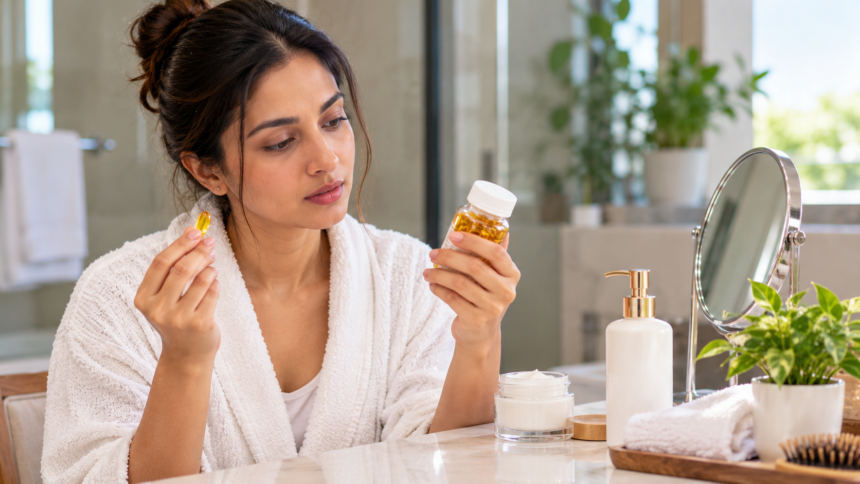
Using vitamin E capsules directly on the face has become a popular do-it-yourself skincare idea, with some people hoping it will moisturise dry skin, improve texture or give the face a natural glow. However, a product designed to be swallowed is not necessarily suitable for direct application to the skin.
Skincare specialists caution that concentrated oils and unsuitable formulations may irritate some skin types. Before trying viral beauty remedies, it is worth understanding what the ingredient can—and cannot—do.
Does Vitamin E Help the Skin?
Vitamin E is an antioxidant that helps protect cells from oxidative damage. It is also used in some moisturisers and skincare formulations to support the skin barrier and reduce moisture loss.
However, evidence for applying vitamin E oil to improve scars, pigmentation or other specific skin concerns is limited. Results can vary, and it should not be considered a guaranteed treatment.
What Are the Risks of Using Capsules Directly?
Capsules intended for oral use may contain concentrated oil or additional ingredients that have not been formulated for facial application. For some people, these products can cause irritation, redness or contact dermatitis. Heavy oils may also worsen clogged pores in acne-prone skin.
If a new product causes burning, itching or a rash, stop using it. Persistent or severe reactions should be assessed by a healthcare professional.
What Is a Safer Skincare Approach?
Choose a moisturiser formulated for the face and suited to your skin type. Introduce new products gradually, follow their instructions and test a small area first when appropriate. For acne, dark spots or persistent dryness, a dermatologist can recommend treatments supported by evidence.
The main takeaway is simple: a popular skincare hack is not automatically safe or effective. A straightforward routine with suitable products is often a better starting point than applying supplements directly to the face.