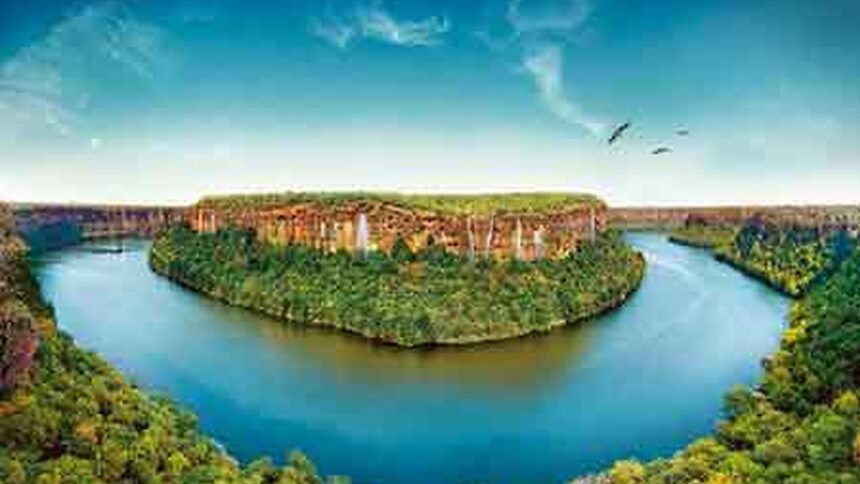
Rajasthan is widely known for its golden deserts, magnificent forts, colourful markets and royal palaces. However, the state’s southern region offers a surprisingly different landscape filled with green hills, rivers, forests and scenic water bodies. One such destination is Banswara, popularly known as the ‘City of 100 Islands’.
Located in southern Rajasthan, Banswara is shaped by the Mahi River and its reservoir, which create a striking landscape of islands and surrounding hills. The region is also known for its rich tribal heritage, particularly the traditions of the Bhil community, making it an interesting destination for nature lovers, history enthusiasts and travellers looking to discover a lesser-known side of Rajasthan.
Why Is Banswara Called the City of 100 Islands?
Banswara gets its popular nickname from the numerous islands scattered across the Mahi River and its reservoir. The Mahi Bajaj Sagar Project has contributed to the region’s distinctive landscape, creating expansive stretches of water surrounded by hills and island-like formations.
Chachakota is one of the places where visitors can experience this scenery. Its green hills, winding roads and water-filled surroundings create beautiful views, particularly during and after the monsoon season.
As rainfall transforms the vegetation and fills the surrounding water bodies, Banswara takes on a lush appearance that contrasts sharply with the dry desert landscapes commonly associated with Rajasthan.
5 Places to Visit in and Around Banswara
1. Mahi Bajaj Sagar Dam
The Mahi Bajaj Sagar Dam is one of Banswara’s prominent attractions. Built across the Mahi River, the dam creates a large reservoir surrounded by hills and scenic water bodies.
The reservoir’s island formations and expansive views offer a landscape quite different from Rajasthan’s more familiar desert scenery. Visitors can enjoy the natural surroundings and explore the area while following local access and safety guidelines.
2. Chachakota
Chachakota is a notable destination for travellers interested in experiencing Banswara’s island landscape.
The area features green hills, winding roads, stretches of water and small island-like formations around the Mahi backwaters. The scenery becomes especially appealing during the monsoon and post-monsoon months, making it a popular choice for photography and nature outings.
3. Kagdi Pickup
Located near Banswara city, Kagdi Pickup is a scenic spot associated with the Mahi Bajaj Sagar Project. The area around Kagdi Lake features water views, landscaped surroundings and gardens.
It is a convenient place for a relaxed outing, particularly for visitors who want to enjoy nature without travelling far from the city. Birdwatching may also be rewarding when suitable seasonal conditions bring birds to the surrounding water bodies.
4. Tripura Sundari Temple
Situated approximately 19 kilometres from Banswara, Tripura Sundari Temple is an important religious destination in the Wagad region.
Dedicated to Goddess Tripura Sundari, the temple is known for its principal idol, which is depicted with eighteen arms and seated on a lion. Devotees from Banswara and neighbouring areas visit the shrine to offer prayers and participate in religious observances.
The temple provides an opportunity to explore the region’s spiritual traditions alongside its natural attractions.
5. Beneshwar Dham
Beneshwar Dham is a significant pilgrimage site associated with the religious and cultural traditions of southern Rajasthan. It is situated near the confluence of the Mahi and Som rivers.
The site attracts devotees and visitors interested in the region’s spiritual heritage. Its riverside setting also adds to the appeal of the surrounding landscape.
How to Reach Banswara
Banswara can be reached by road from several cities in Rajasthan and neighbouring states. Travellers can choose between air, rail and road connections.
By air: Maharana Pratap Airport in Udaipur is one of the nearest airport options, approximately 185 kilometres from Banswara. From there, visitors can continue by road using a taxi or other available transport.
By train: Ratlam Junction in Madhya Pradesh is a nearby major railway station, roughly 80 kilometres away. Udaipur railway station is another option, although the onward distance is longer. Travellers should check train availability and onward road connections before finalising their itinerary.
By road: Banswara is accessible by road from cities including Udaipur, Jaipur, Ahmedabad and Ratlam. State transport and private bus services may be available on these routes, while taxis and private vehicles offer additional flexibility.
Travel times can vary according to the starting point, road conditions and transport availability.
Best Time to Visit Banswara
The period from September to March is generally suitable for exploring Banswara, particularly for travellers interested in sightseeing and outdoor activities.
- Monsoon and post-monsoon (July to October): The landscape becomes greener, and the rivers, reservoirs and surrounding hills offer attractive views. Rainfall can affect road conditions, so visitors should check local weather and access updates.
- Winter (November to February): Cooler weather makes it more comfortable to explore temples, dams, scenic viewpoints and nearby attractions.
- Summer (March onwards): Temperatures can rise, so outdoor sightseeing is generally more comfortable during the cooler parts of the day.