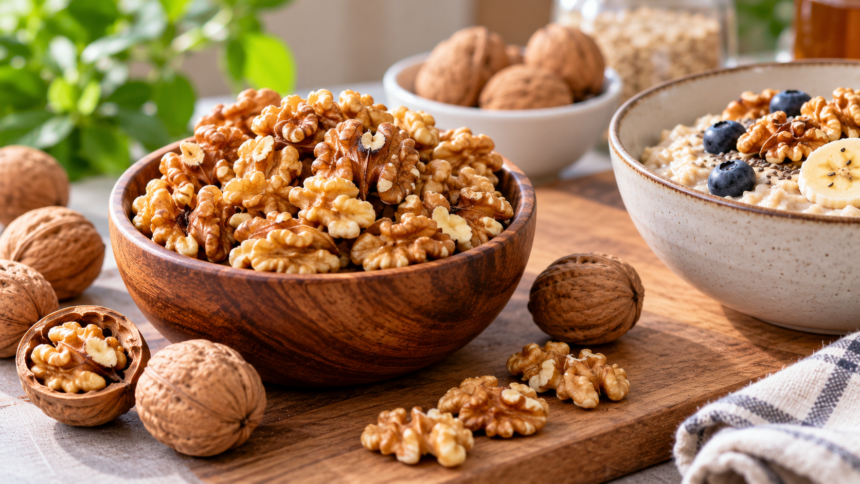
A new study suggests that including walnuts in everyday meals may help improve the overall nutritional quality of a person’s diet and reduce its potential to promote inflammation. The findings highlight how a simple dietary change could contribute to healthier eating habits, particularly among older adults.
Researchers examined the effects of regular walnut consumption over two years and found that participants who ate walnuts daily had more favorable dietary inflammation scores than those who avoided them.
Study Examines the Benefits of Daily Walnut Consumption
The research analysed data from 319 healthy adults aged 63 to 79 who participated in the Walnuts and Healthy Aging trial.
Participants were divided into two groups. One group consumed approximately 1 to 2 ounces of raw walnuts every day, while the other group avoided walnuts during the two-year study period.
Researchers evaluated participants’ diets using the Dietary Inflammatory Index, a measurement system that estimates the inflammatory potential of food based on 45 dietary components.
The results showed that people who regularly consumed walnuts had significantly lower dietary inflammatory scores. Their average score was approximately 0.59 points lower than that of participants who did not eat walnuts, even after researchers accounted for several lifestyle factors.
Why Walnuts May Support a Healthier Diet
Walnuts contain several nutrients and plant compounds that may contribute to their potential health benefits.
One important component is alpha-linolenic acid (ALA), a plant-based omega-3 fatty acid associated with anti-inflammatory effects.
Walnuts also provide polyphenols, which are naturally occurring plant compounds that may help support cellular health.
In addition, they contain dietary fiber and magnesium, nutrients that play important roles in normal bodily functions.
Previous research has also examined possible connections between walnut consumption and improvements in cholesterol levels, blood pressure and digestive health.
How Walnuts Can Fit Into Everyday Meals
The findings suggest that walnuts can be a useful addition to a varied and balanced diet.
They can be incorporated into oatmeal, yogurt, salads, smoothies and other everyday dishes without requiring major changes to established eating habits.
However, researchers have not established walnuts as a treatment for inflammation-related medical conditions.
Overall, the study adds to growing evidence that the quality of everyday food choices may influence long-term health. Regular walnut consumption may be one practical way to improve dietary quality, although additional research is needed to understand its direct effects on inflammation.