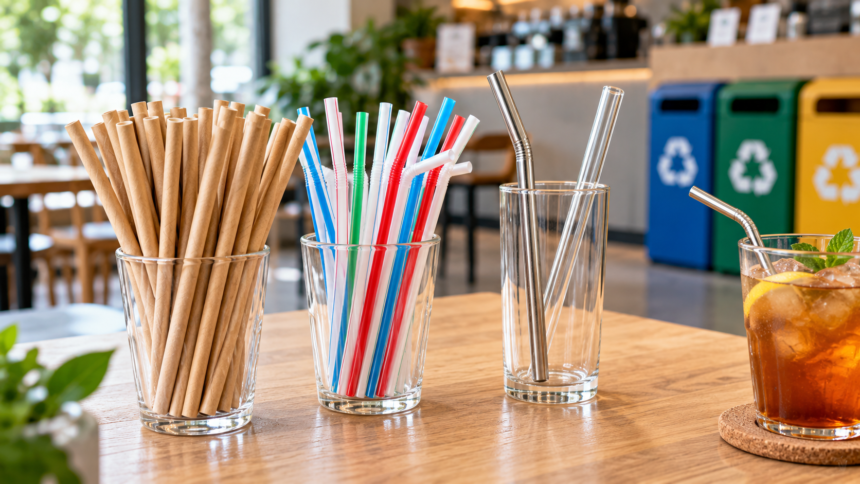
Paper straws are often chosen as an alternative to conventional plastic because they are widely perceived as more environmentally friendly. However, a new South Korean government-commissioned study has raised questions about whether switching materials always reduces environmental harm.
The assessment found that paper straws had a 6.33 times higher modelled human carcinogenic impact than conventional plastic straws across their life cycle. The comparison included the effects associated with raw material production, manufacturing and disposal. Researchers also found that some biodegradable and plant-based alternatives had higher impacts in several assessment categories.
Importantly, this figure does not mean that using a paper straw makes a person 6.33 times more likely to develop cancer. It is a life-cycle assessment measure, not a direct measurement of cancer risk among people who use straws.
Researchers Compared Four Types of Straws
The study examined conventional plastic straws, paper straws, biodegradable plastic straws and bio-based polyethylene alternatives. Researchers assessed their environmental effects across 16 categories, including greenhouse gas emissions, human toxicity, particulate matter and acidification.
Conventional plastic straws recorded the lowest impact in 10 of the 16 categories assessed. Paper straws had a higher modelled carcinogenic impact and a greater acidification impact than conventional plastic alternatives.
Biodegradable plastic straws also recorded a higher modelled carcinogenic impact, at 3.34 times that of conventional plastic straws. Bio-based polyethylene performed particularly poorly in this category, with a reported impact 16.18 times higher.
These findings illustrate why the environmental performance of a product cannot always be judged by its material alone.
Why Paper and Biodegradable Alternatives Can Have Drawbacks
A product’s environmental footprint includes more than what happens after it is thrown away. Raw material extraction, manufacturing processes, energy use, transport and waste management can all affect its overall impact.
Paper products require resources and energy to manufacture, while some alternatives involve chemical processing or specialised production methods. Their final environmental performance also depends on how waste is handled.
The assessment highlighted another practical challenge: disposable straws can be difficult to recycle because their small size makes them hard to separate in sorting facilities. Coatings and adhesives may create further complications.
What the Findings Mean for Consumers
The research does not establish that plastic straws are universally safer or better. Plastic waste can persist in the environment, and the study assessed several different environmental categories rather than identifying one material as the best choice in every situation.
Instead, the findings suggest that reducing unnecessary single-use products may be more effective than simply replacing one disposable material with another. Reusable alternatives can reduce demand for disposable straws when they are practical, suitable and used repeatedly.
More Than One Factor Determines Environmental Impact
The South Korean assessment adds to the debate about how governments and businesses should evaluate alternatives to conventional plastic. Environmental policies need to consider a product’s complete life cycle rather than focusing on a single feature, such as whether it is paper-based or labelled biodegradable.
For consumers, the key takeaway is to treat broad claims about environmentally friendly products carefully. A material’s reputation does not necessarily reflect its total environmental footprint, and a modelled environmental impact should not be confused with an individual’s direct medical risk.