Artificial intelligence is opening new possibilities in medical research, particularly in the early detection of diseases that are difficult to identify through conventional methods. A developing AI technology called REDMOD has attracted attention for its potential to identify subtle signs associated with pancreatic cancer before the disease becomes apparent on standard scans. The approach could eventually help doctors recognise patients who may need closer examination, although further research is necessary before it can be used routinely in clinical practice.
Why Early Detection Matters
Pancreatic cancer is often challenging to detect in its early stages because noticeable symptoms may not appear until the disease has progressed. By that point, treatment options can become more limited. This is why researchers are exploring new technologies that could help identify suspicious changes earlier, potentially creating more opportunities for timely medical evaluation.
How AI Could Help Doctors
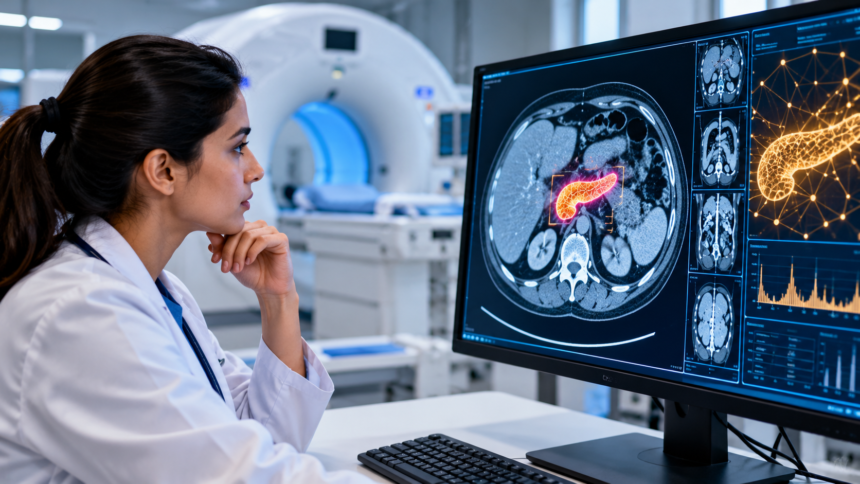
AI-based medical imaging systems are designed to analyse scans and identify patterns that may be difficult to recognise during routine assessments. REDMOD aims to detect subtle signals in medical images that could be associated with the development of pancreatic cancer. According to reports about the research, the system identified potential warning signs an average of several years before a formal diagnosis. However, these findings should be interpreted cautiously until the results are fully validated in larger and independent studies.
What This Could Mean for Patients
If future research confirms the technology’s accuracy, AI-assisted analysis could potentially support doctors in identifying people who may benefit from additional testing or closer monitoring. Earlier identification might help healthcare teams investigate concerning findings sooner. Nevertheless, an AI-generated signal cannot independently confirm that someone has cancer, and it should not replace medical examinations, diagnostic testing or professional judgement.
More Research Is Still Needed
Before systems such as REDMOD become part of routine healthcare, researchers must establish how accurately they detect disease, how often they produce false alarms and whether their use improves patient outcomes. Medical teams must also determine which patients would benefit most from this approach.
The development reflects the growing role of AI in medical research, but it does not mean pancreatic cancer can already be reliably predicted years in advance for everyone. For now, the technology represents a promising area of investigation rather than an established screening method. People experiencing persistent or concerning symptoms should seek medical advice instead of relying on AI tools for diagnosis.