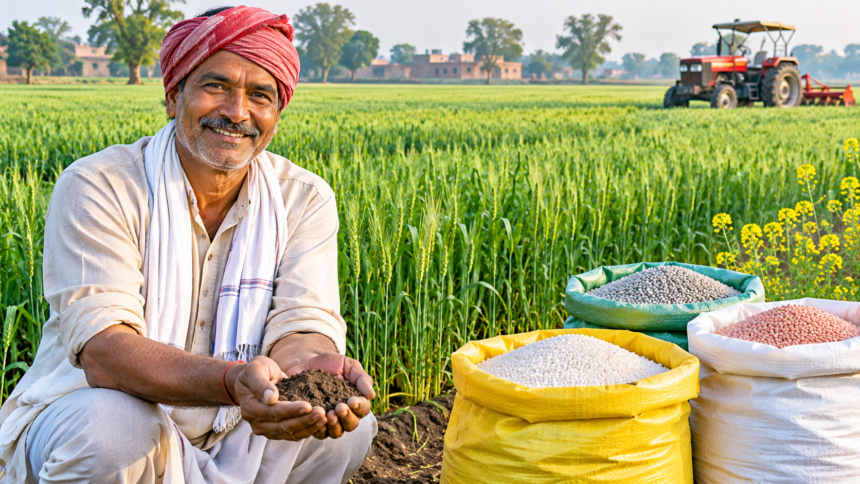
Farmers across India are set to benefit from continued government support on fertilisers after the Union Cabinet approved a subsidy package worth approximately ₹62,370 crore for the Rabi 2026–27 season.
The decision aims to ensure the availability of essential agricultural nutrients at affordable prices and protect farmers from fluctuations in international fertiliser markets.
Subsidy Allocation Increased by Nearly 64%
The government has approved a total budgetary requirement of ₹62,370.02 crore under the Nutrient Based Subsidy (NBS) scheme for phosphatic and potassic fertilisers.
This represents an increase of approximately ₹24,418 crore compared with the previous Rabi season’s allocation of ₹37,952.29 crore.
The higher allocation reflects rising international prices of fertiliser ingredients and the government’s efforts to maintain affordable agricultural inputs.
28 Grades of Fertilisers Covered Under the Scheme
The approved subsidy will cover 28 grades of phosphatic and potassic fertilisers, including Di-Ammonium Phosphate (DAP) and various NPKS fertiliser combinations.
The revised subsidy rates will remain applicable to March 31, 2027.
Under this system, the government provides financial support to fertiliser manufacturers and importers so that farmers can purchase these essential agricultural products at more affordable prices.
Relief for Farmers During the Rabi Season
The Rabi season is particularly important for crops such as wheat, mustard, gram and barley. Fertilisers play a major role in maintaining soil nutrients and supporting crop development.
Higher subsidy support is expected to help control fertiliser costs and reduce the financial pressure on farmers during the sowing season.
What Does This Mean for Farmers?
The increased allocation is expected to strengthen fertiliser availability and provide greater price stability during the ongoing agricultural season.
Farmers will benefit through subsidised fertiliser prices rather than receiving the entire subsidy amount directly in their bank accounts.
The move highlights the government’s continued focus on agricultural support and reducing input costs for the farming community.