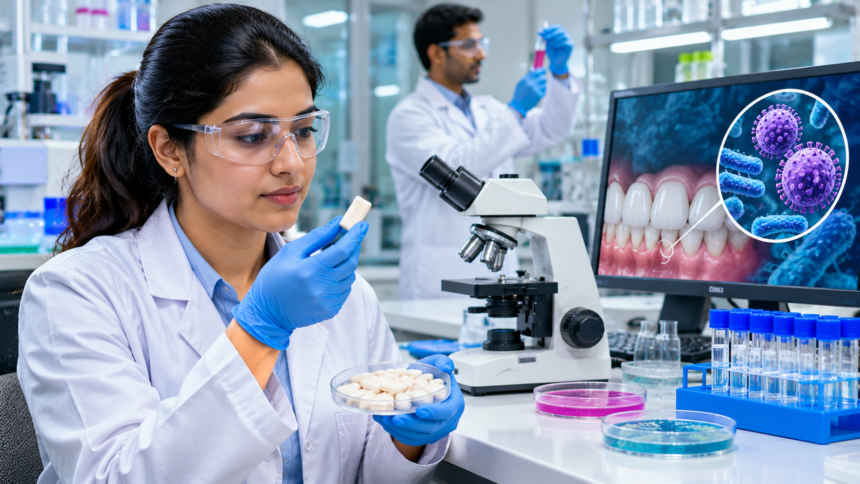
Scientists have developed an experimental chewing gum that could open a new direction in dental health and cancer research. In laboratory testing, the specially engineered gum reduced levels of human papillomavirus (HPV) by up to 93% in saliva samples collected from patients with head and neck cancer.
The research offers a promising approach to targeting harmful microbes in the mouth while preserving beneficial bacteria.
How Does the New Chewing Gum Work?
The experimental gum is made using lablab beans, which contain a natural protein called FRIL. This protein has antiviral properties and was investigated for its ability to reduce HPV levels in oral samples.
Researchers also developed an enhanced version containing an antimicrobial ingredient called protegrin, which helped reduce two bacteria associated with oral disease to nearly undetectable levels in laboratory tests.
Up to 93% Reduction in HPV Levels
The laboratory results showed:
- HPV levels decreased by up to 93% in saliva samples.
- HPV levels fell by approximately 80% in oral rinse samples.
- Two targeted harmful bacterial species were reduced to nearly undetectable levels with the enhanced formulation.
- Beneficial oral bacteria examined in the study were preserved.
Why This Discovery Matters
The mouth contains a complex community of microorganisms, including bacteria that support normal oral health. Some harmful microbes have been associated with oral diseases and certain head and neck cancers.
The new approach aims to target specific harmful microorganisms without disturbing the wider oral microbiome.
Human Trials Still Needed
Although the findings are encouraging, the research was conducted using laboratory testing of patient samples, not a clinical trial in which people chewed the gum.
Further studies will be needed to establish its safety, effectiveness and potential medical applications. The experimental gum is not currently a proven method for preventing or treating cancer.