The Central Government’s Lakhpati Didi Initiative is making significant progress in improving the financial independence of rural women across India. According to the latest government update , approximately 3.76 crore women associated with rural Self-Help Groups (SHGs) had achieved Lakhpati Didi status by June 2026.
The initiative aims to help women from rural households develop sustainable sources of income through small businesses, agricultural activities, livestock farming, food processing and other income-generating opportunities. The government has now set an ambitious target of creating six crore Lakhpati Didis by March 2029.
What Is the Lakhpati Didi Initiative?
A Lakhpati Didi is a woman associated with a Self-Help Group whose household earns at least ₹1 lakh annually through sustainable livelihood activities. The calculation is based on the family’s total income after expenses rather than the earnings of an individual woman alone.
The initiative operates under the Deendayal Antyodaya Yojana–National Rural Livelihoods Mission (DAY-NRLM). Through this programme, rural women are organised into Self-Help Groups and connected with financial services, skill development programmes, business opportunities and market support.
Women are encouraged to start or expand income-generating activities so that their families can become financially stronger and less dependent on a single source of income.
3.76 Crore Women Have Already Achieved Lakhpati Didi Status
The latest government figures show that 3.76 crore rural SHG women had become Lakhpati Didis by June 2026. In addition, around 5.70 crore women had been identified as potential Lakhpati Didis, indicating further scope for the programme’s expansion.
The initiative has gradually expanded since its launch in August 2023. The original target of two crore women was increased to three crore in February 2024. After achieving that target ahead of schedule in December 2025, the government raised its ambition to six crore women by March 2029.
Study Reports Improvement in Household Income and Savings
An independent assessment conducted by IIM Ahmedabad has highlighted the economic impact of the initiative. The study covered 6,531 respondents across 17 states and Union Territories.
According to its findings, average monthly household income among the assessed Lakhpati Didi households increased by 61%. Average monthly savings also recorded a rise of 61.7%.
These findings suggest that improved access to livelihood opportunities, financial services and business support can help rural families strengthen their economic position.
How Self-Help Groups Are Supporting Rural Women
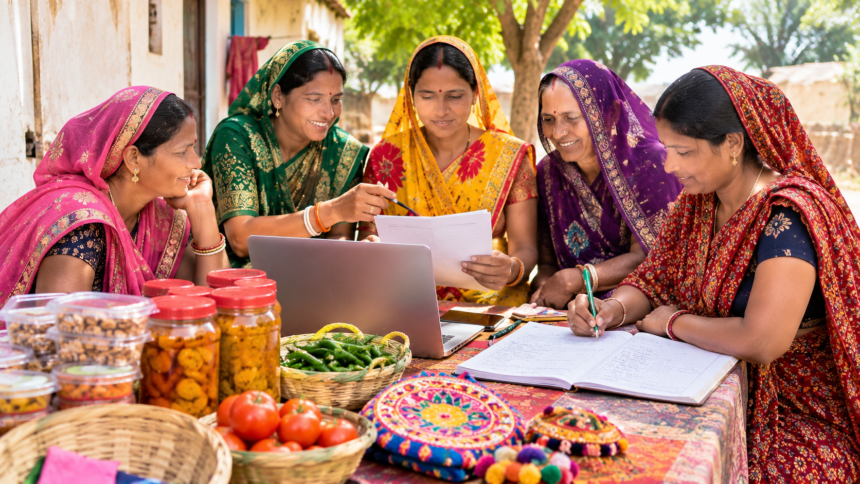
Self-Help Groups play a central role in implementing the initiative. They help women develop regular savings habits, access bank loans, receive training and explore opportunities for small enterprises.
DAY-NRLM had mobilised approximately 10.13 crore women into 94.40 lakh Self-Help Groups across the country.
Trained Community Resource Persons also help women prepare business plans and identify opportunities in farming, dairy, livestock, food processing and other activities.
Government’s Next Target: Six Crore Lakhpati Didis
The government is now focusing on expanding the programme to reach women who are still earning below the ₹1 lakh annual household income benchmark. Greater access to credit, training, digital tools and markets will be important for achieving this target.
The Lakhpati Didi Initiative is increasingly being positioned as a rural livelihood and women-led entrepreneurship programme rather than simply a financial assistance scheme. Its next phase will focus on helping more rural families build stable and sustainable sources of income.