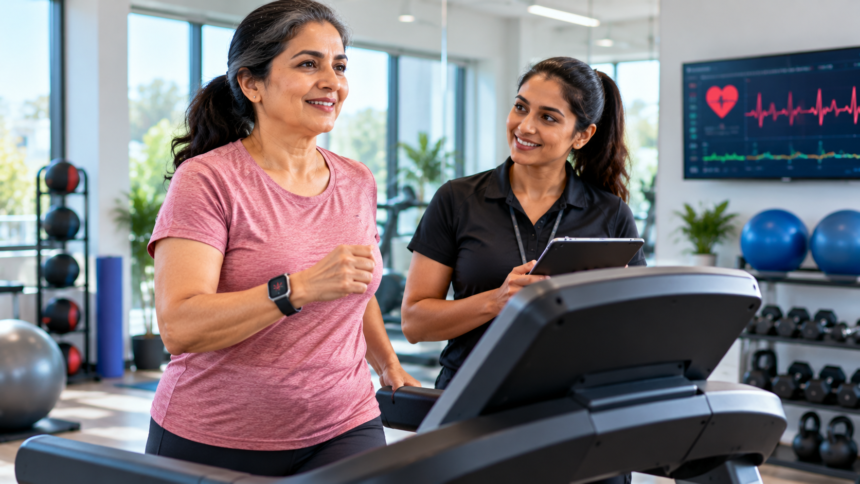
High-intensity interval training (HIIT) may help middle-aged and older women improve their cardiovascular fitness, according to a new research review involving 19 clinical trials. The findings suggest that interval-based exercise can improve the body’s ability to use oxygen, an important indicator of heart and lung fitness.
The research also highlights the importance of maintaining physical activity as people grow older, particularly when natural age-related changes begin affecting cardiovascular capacity and muscle function.
Review Examines 19 Clinical Trials
Researchers examined whether high-intensity interval training could improve cardiorespiratory fitness and physical performance.
The analysis found a significant improvement in maximal oxygen uptake, commonly known as VO2 max. This measurement indicates how effectively the body takes in and uses oxygen during intense physical activity.
However, the researchers did not find consistent improvements across all measures of physical fitness.
How Interval Training Supports Heart Fitness
HIIT involves alternating periods of more vigorous physical activity with recovery periods. This approach places varying demands on the cardiovascular and respiratory systems.
With regular and appropriately supervised training, the body can develop adaptations that improve oxygen delivery and utilisation during exercise.
The review found that improvements in VO2 max were particularly noticeable among the women included in the analysis.
These findings suggest that interval-based exercise may be a useful option for improving aerobic fitness as people age.
Muscle Strength Benefits Were Less Clear
Although the review identified improvements in aerobic capacity, it did not establish significant benefits in muscle strength.
Researchers also found no consistent improvements in certain physical-function measurements, including flexibility and sit-to-stand performance.
This distinction is important because cardiovascular endurance and muscular strength are different aspects of physical fitness.
The findings suggest that improving heart and lung capacity alone may not be enough to maintain all aspects of physical independence during ageing.
What the Findings Mean for Healthy Ageing
The research adds to growing evidence that regular physical activity can support healthy ageing. However, it does not establish that HIIT reverses ageing, prevents all age-related diseases or extends life expectancy.
High-intensity exercise may not be appropriate for everyone, particularly people with certain medical conditions or limited exercise experience. Physical activity should be selected according to individual health and fitness levels.
A balanced approach that includes appropriate aerobic activity, muscle-strengthening exercises and balance training remains important for maintaining overall fitness.
The researchers’ findings highlight the potential value of interval training for cardiovascular health while emphasising that different forms of physical activity contribute to different aspects of healthy ageing.