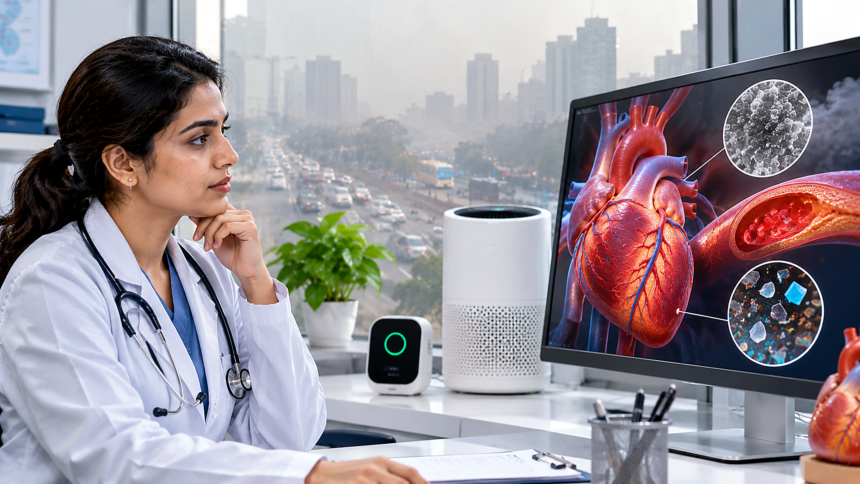
Air pollution may affect more than just the lungs. New research and medical findings are raising concerns about how prolonged exposure to fine particulate matter (PM2.5) and microplastics could affect the heart and blood vessels.
A health report highlights growing evidence connecting environmental pollution with cardiovascular problems, including high blood pressure, inflammation and an increased risk of heart-related complications.
How PM2.5 Can Affect the Heart
PM2.5 refers to extremely fine airborne particles that can enter deep into the lungs. Some pollutants may also pass into the bloodstream, triggering inflammation and oxidative stress.
According to cardiologist , prolonged exposure can damage the inner lining of blood vessels, affect circulation and contribute to high blood pressure.
Over time, these changes may encourage plaque accumulation inside arteries, increasing cardiovascular risks.
Microplastics Raise New Health Concerns
Scientists are also investigating the possible effects of microplastics and nanoplastics on cardiovascular health.
An Italian study published in the European Heart Journal examined 61 patients undergoing coronary angiography.
Researchers detected microplastics and nanoplastics in:
- 84% of patients experiencing a serious heart attack.
- 40% of patients with chronic coronary syndromes.
- 32% of patients with normal coronary arteries.
The study also identified higher inflammatory markers among patients with heart attacks.
However, researchers have not established that microplastics directly cause heart attacks. The findings show an association that requires further investigation.
Can Pollution Affect Otherwise Healthy People?
Long-term exposure to polluted air may affect people even when they have no previously diagnosed heart condition.
Repeated exposure can contribute to inflammation, oxidative stress and changes in blood vessel function. These effects may gradually increase cardiovascular risks.
This means that maintaining healthy lifestyle habits alone may not completely eliminate the health effects of prolonged environmental pollution.
What Can People Do to Reduce Exposure?
Doctors recommend taking sensible precautions during periods of poor air quality:
- Check local AQI levels before outdoor activities.
- Reduce prolonged outdoor exercise when pollution is severe.
- Use a well-fitted N95 mask when exposure cannot be avoided.
- Consider a properly sized HEPA air purifier for indoor spaces.
- Avoid tobacco smoke and excessive indoor cooking fumes.
- Avoid heating food in plastic containers and prefer glass or stainless steel for food storage.
- Monitor blood pressure and other cardiovascular risk factors with appropriate medical guidance.
The emerging research highlights why cleaner air is important not only for respiratory health but also for protecting long-term cardiovascular well-being.