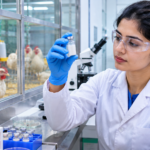
Scientists at the University of Virginia have identified specialised stem cells and biological pathways that play an important role in keeping skin healthy and naturally moisturised. The discovery could open new possibilities for developing treatments for dry skin, particularly skin-related changes associated with ageing.
How Skin Maintains Its Natural Moisture
The study focused on sebaceous glands, tiny structures connected to hair follicles that produce an oily substance called sebum.
Sebum helps protect and moisturise the skin and hair. When the body produces too little of it, the skin can become dry. Excessive production, on the other hand, can contribute to acne.
Researchers identified a population of stem cells marked by a protein called KROX20, which helps generate and maintain sebaceous glands.
Scientists Identify an Important Signalling Pathway
The research team discovered that KROX20 regulates a biological communication system known as the Notch signalling pathway.
Experiments showed that removing KROX20 or disrupting Notch1 activity caused sebaceous glands to shrink. The changes also increased water loss through the skin, producing dryness similar to that associated with ageing.
In laboratory models, activating the Notch pathway helped restore gland structure and reduce water loss.
Could This Discovery Lead to New Dry Skin Treatments?
The findings offer a possible direction for future treatments designed to improve the skin’s natural oil production and protective barrier.
Researchers believe that targeting the biological pathways responsible for maintaining sebaceous glands could eventually help people experiencing age-related dry skin.
However, the findings are based on laboratory research and do not establish an available treatment for people. Further studies will be needed to determine whether this approach is safe and effective in humans.