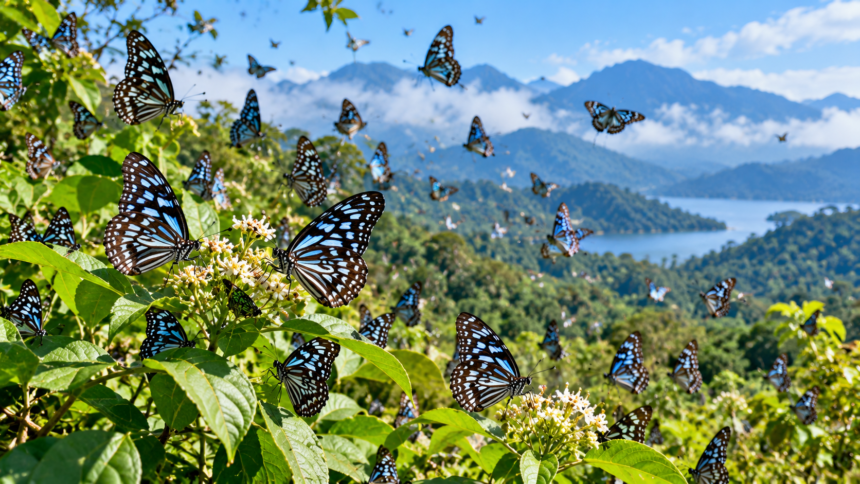
A remarkable natural spectacle is unfolding across Tamil Nadu as millions of blue tiger and dark blue tiger butterflies move from the Eastern Ghats towards the Western Ghats. The seasonal movement has drawn attention from nature enthusiasts and wildlife watchers as the region enters the North-East monsoon period.
The migration has been observed in areas including Coimbatore, Salem, Erode, Tiruppur and Madurai, offering a chance to witness one of nature’s seasonal movements across both urban and rural landscapes.
Why the Butterfly Migration Happens
The movement is linked to seasonal changes that influence butterfly behaviour and migration patterns. As weather conditions shift with the monsoon, the butterflies travel across different landscapes, connecting habitats in the Eastern and Western Ghats.
Blue tiger butterflies and dark blue tiger butterflies are known for their striking wing patterns, making large groups of them particularly noticeable to observers.
Where Nature Enthusiasts May Spot Them
Reports of the migration across several Tamil Nadu districts have created interest among people who enjoy wildlife observation and nature photography. The butterflies may be seen moving through different landscapes, although sightings can vary with local weather and conditions.
Anyone hoping to observe them should avoid disturbing the butterflies or damaging the plants and habitats they depend on.
A Reminder of India’s Natural Diversity
The annual migration highlights the ecological links between the Eastern and Western Ghats. Seasonal wildlife movements such as this also provide opportunities for people to learn about biodiversity close to home.
For nature lovers, the spectacle is a reminder that memorable travel experiences do not always require famous monuments or crowded tourist attractions. Sometimes, observing a seasonal event in the natural world can be an experience in itself.