
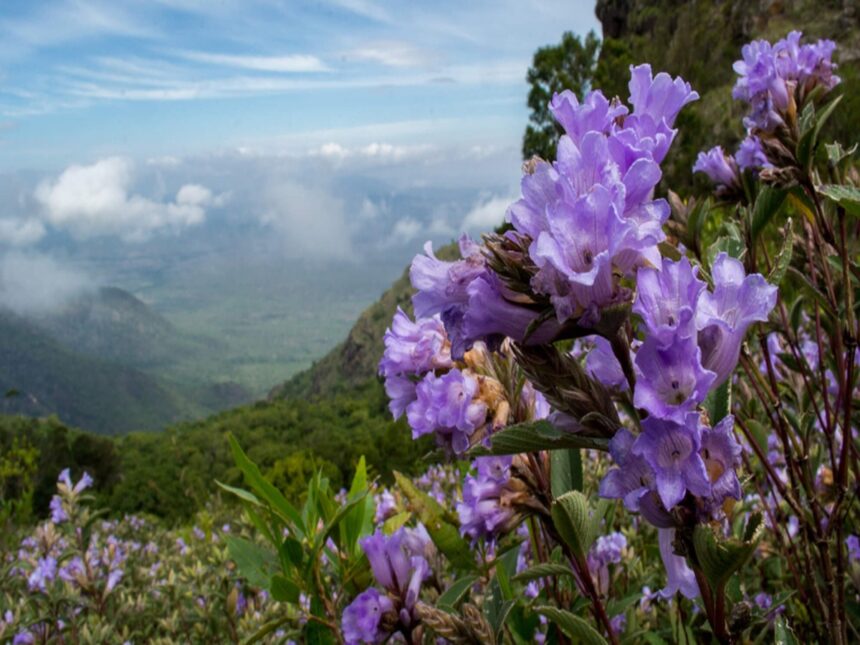
Munnar is famous for its rolling tea plantations, misty mountains and lush green landscapes. But in September 2026, the hill station is offering visitors something even more extraordinary—the hills are covered in shades of blue and purple.
The reason behind this spectacular transformation is the blooming of Neelakurinji, a rare flowering plant that puts on its remarkable floral display only once every 12 years. If you are planning to witness this unusual natural phenomenon, here is everything you need to know about the bloom, the best viewing spots and how to reach Munnar.
Why Has Munnar Turned Blue and Purple in September 2026?
The stunning blue and purple colour across parts of Munnar is caused by Neelakurinji, scientifically called Strobilanthes kunthiana.
This rare flowering plant is native to the high-altitude regions of the Western Ghats and is generally found at elevations above 1,500 metres. What makes it particularly fascinating is its unusual flowering cycle.
Neelakurinji plants grow for around 12 years before flowering on a large scale. When the flowering season arrives, numerous plants bloom around the same time, covering the hillsides in vibrant blue and purple shades. After producing seeds, the plants complete their life cycle and die.
The species is considered vulnerable, with habitat loss, invasive plants and increasing tourism posing challenges to its natural environment. This makes the 2026 flowering season an especially memorable opportunity for nature lovers.
Best Places to See Neelakurinji in Munnar
If seeing the famous blue-and-purple hills is the main reason for your trip, some of the key areas to consider are:
- Chokramudi Hills
- Korandakkad-Mattupetty Hills
These locations are among the places where the Neelakurinji bloom can currently be seen.
One important point for travellers: Eravikulam National Park is not the place to visit specifically for the 2026 Neelakurinji bloom. Instead, focus on the currently flowering areas such as Chokramudi and the Korandakkad-Mattupetty region.
How to Plan a Munnar Trip During the Neelakurinji Bloom
A little planning can make your visit much more comfortable, particularly because the popular viewing areas can attract crowds.
Travelling by Road
Munnar is well connected by road, and buses, taxis and private vehicles are available from nearby airports and railway stations.
For visitors heading towards Chokramudi Hills or the Korandakkad-Mattupetty areas, vehicles may be stopped around 1–2 km before certain viewing locations. From there, visitors may need to use a local jeep to get closer to the site.
If you are travelling from Kochi, a commonly preferred route is:
Kochi → Perumbavoor → Kothamangalam → Adimali → Munnar
Travellers arriving from Tamil Nadu can consider the Madurai route.
Travelling by Air
The closest major airport is Cochin International Airport (COK). It is approximately 105–110 km from Munnar and the journey by road generally takes around 3.5 to 4 hours, depending on traffic and road conditions.
Another option is Coimbatore International Airport, which is roughly 170 km from Munnar.
Travelling by Train
Munnar does not have a railway station of its own. The nearest major railway stations include:
- Aluva (AWY) – approximately 110 km
- Ernakulam Junction (ERS) – approximately 130 km
- Kottayam – approximately 150 km
From these stations, you can continue your journey to Munnar by bus, taxi or private vehicle.
When Is the Best Time to See Neelakurinji in Munnar?
For those hoping to experience the 2026 bloom, September and October 2026 are considered the key months.
For a more pleasant sightseeing experience, try to arrive early in the day. Between 7 AM and 10 AM can be a good window, as the popular viewing areas may be less crowded during the early hours.
Since the bloom is a seasonal natural event, conditions can vary from one location to another, so travellers should check local updates before heading out.
Is There an Entry Fee to See Neelakurinji?
You may be able to spot Neelakurinji from roads and publicly accessible areas without paying a separate sightseeing fee.
However, the Chokramudi viewing gallery may charge a small entry fee of approximately ₹20–₹25.
Fees and access arrangements can change, so it is advisable to confirm the latest information locally before visiting.
Important Things to Remember During Your Visit
Neelakurinji is a delicate natural spectacle, and visitors should take care not to damage the plants or their surroundings.
Keep these points in mind:
- Avoid carrying plastic bottles, bags and other plastic items where a no-plastic rule is in place.
- Do not pluck or touch the flowers.
- Never sit on or walk over the flowering plants.
- Remain on designated paths and trails.
- Drone use is restricted and may require official permission.
- Wear comfortable trekking or sturdy walking shoes, as some viewing areas involve uphill walking.
- Follow instructions from local authorities and staff at the sightseeing locations.
Responsible tourism is particularly important during a rare flowering season like this, as the natural habitat needs to be protected for future generations.
Other Places to Visit in Munnar
The Neelakurinji bloom can be the highlight of your trip, but Munnar has plenty more to explore.
Depending on your itinerary, you can visit:
- Mattupetty Dam
- Echo Point
- Kundala Lake
- Meesapulimala
- Eravikulam National Park
- Tea Museum
- Chinnakanal Waterfalls
- Anamudi Shola National Park
These attractions allow you to experience Munnar’s mountains, lakes, waterfalls, forests and tea-growing landscapes beyond the seasonal flower bloom.
Don’t Miss Munnar’s Rare Blue-and-Purple Season
The Neelakurinji bloom is one of Munnar’s most remarkable natural spectacles. With vast stretches of hillside taking on blue and purple hues, the 2026 season offers travellers a rare chance to witness a phenomenon that occurs only once in approximately 12 years.
If you are planning to visit, September–October 2026 is the period to keep in mind. With the next major bloom expected around 2038, this is an opportunity that nature lovers may not want to miss.
Plan responsibly, respect the flowering plants and enjoy Munnar’s extraordinary transformation while it lasts.