Rising air pollution during the winter season is becoming a growing health concern, particularly in cities experiencing high pollution levels. Doctors are warning that prolonged exposure to polluted air can affect not only the lungs but also the heart, eyes and overall respiratory health.
How Air Pollution Affects the Body
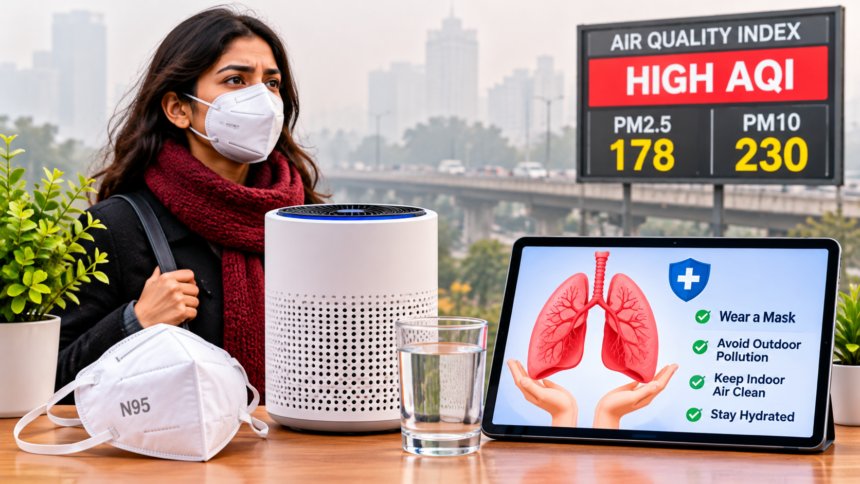
Fine particles such as PM2.5 and PM10 can travel deep into the respiratory system. Exposure may cause throat irritation, watery eyes, sneezing, persistent coughing and breathing discomfort.
According to pulmonology experts, people with asthma, allergies and other existing respiratory conditions may experience worsening symptoms during periods of heavy pollution.
Children and Older Adults Face Greater Risks
Children and older adults are particularly vulnerable to poor air quality. Children have developing lungs, while older people may be more susceptible to respiratory and cardiovascular complications.
People with existing heart or lung conditions should also take extra care when pollution levels rise.
Six Ways to Reduce Exposure to Pollution
Health experts recommend several precautions:
- Check local Air Quality Index (AQI) updates before planning outdoor activities.
- Avoid strenuous outdoor exercise when pollution levels are high.
- Wear a well-fitted N95 or equivalent respirator when outdoor exposure is unavoidable.
- Keep windows closed during periods of heavy outdoor pollution.
- Consider a suitable HEPA air purifier for indoor spaces.
- Follow prescribed treatment plans if you have an existing respiratory condition.
Warning Signs That Should Not Be Ignored
Persistent coughing, wheezing, chest tightness and unusual breathing difficulties may indicate respiratory irritation. Severe breathlessness or persistent chest pain requires urgent medical attention.
Doctors emphasise that reducing exposure to polluted air and taking timely precautions can help protect respiratory health during the winter season.