

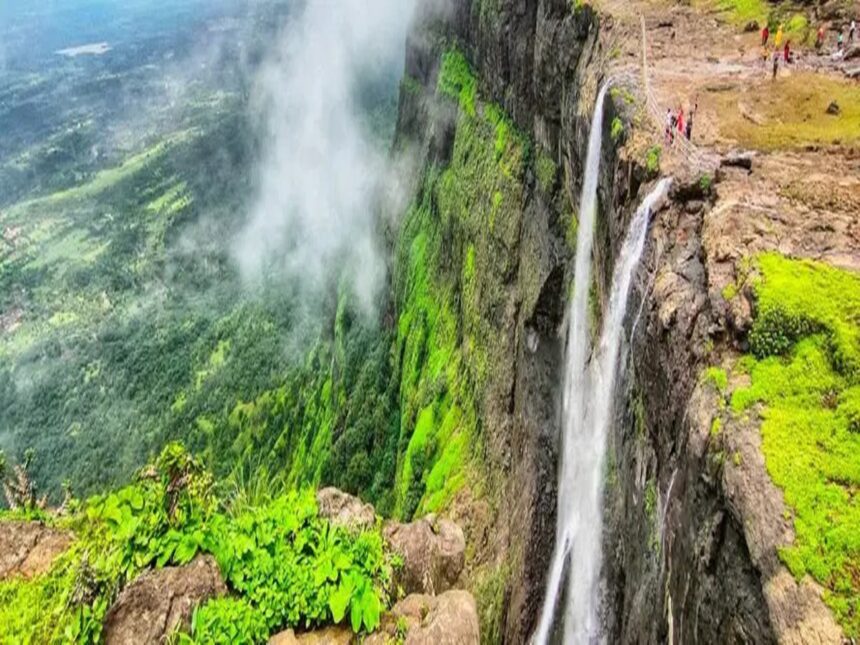
Nature can create spectacles that seem to challenge everything we know about the laws of physics. One such extraordinary sight can be witnessed during the monsoon at Naneghat in Maharashtra, where water rushing over a cliff appears to travel upward instead of falling into the gorge below.
The unusual phenomenon has made Naneghat’s reverse waterfall a popular monsoon attraction. What looks almost like a scene from a fantasy film is actually the result of powerful winds interacting with falling rainwater.
Located in the Sahyadri ranges near Junnar in Maharashtra’s Pune district, Naneghat is much more than a seasonal waterfall. The ancient mountain pass combines spectacular monsoon scenery with centuries of history, making it an interesting destination for trekkers, nature lovers and history enthusiasts.
Why Does Naneghat’s Waterfall Flow Upwards?
The reverse movement of the water has a scientific explanation rather than a supernatural one.
During the southwest monsoon, strong winds sweep inland from the Arabian Sea and move across the Konkan region before reaching the Sahyadri mountains. At Naneghat, powerful air currents hit the mountains and create strong upward drafts.
When these winds encounter water flowing over the cliff, they can push and scatter the falling water back towards the plateau. Instead of dropping directly into the gorge, the water is carried upward by the force of the wind, creating the spectacular appearance of a waterfall flowing in reverse.
The combination of heavy rainfall, strong winds and the area’s steep terrain produces a huge spray of mist. Visitors standing near the edge may find themselves surrounded by water droplets rising through the air, making the experience especially dramatic during peak monsoon.
Naneghat’s Fascinating Historical Past
The natural spectacle is only one part of Naneghat’s appeal.The region also played an important role in India’s ancient trade history.
Naneghat served as a strategic mountain passage connecting the Konkan coast with the Deccan Plateau during the Satavahana period. Traders used the route to travel between the two regions, and the pass functioned as an important commercial link.
The name Naneghat is commonly associated with the words ‘nane,’ meaning coins, and ‘ghat,’ meaning mountain pass, reflecting its historic role as a toll collection point.
Visitors can still find several remnants of this ancient past around the site.
Ancient Stone Containers
Large stone vessels carved into the rock are believed to have been used for collecting and storing coins at the ancient toll point.
Brahmi Inscriptions
The surrounding caves contain inscriptions written in the ancient Brahmi script, offering a glimpse into the region’s historical importance.
Rock-Cut Caves
The mountain also features caves carved into the rock that served as shelters and resting places for travellers passing through the ancient route.
How to Reach Naneghat Reverse Waterfall
Naneghat can be reached from both Mumbai and Pune, making it a popular option for a monsoon road trip or weekend adventure.
By Train
Kalyan Junction is one of the major railway stations used by travellers heading towards Naneghat and is roughly 85 km away. From Kalyan, visitors can continue by state transport buses or private taxis towards the Junnar-Malshej region and reach the trekking route near Vaishakhare village.
By Bus
MSRTC buses connect Mumbai, Thane, Kalyan and Pune with destinations such as Junnar and Alephata. Depending on the route, travellers can get down near Vaishakhare for the trekking approach or travel towards Ghatghar for easier road access.
By Road
Driving is one of the most convenient ways to explore Naneghat, especially during the monsoon when the surrounding Sahyadri landscape turns lush green.
The journey from Mumbai or Pune generally takes around three to four hours, depending on traffic and road conditions. Visitors can find parking options around the base villages and near the plateau.
Naneghat Trek: Route and Difficulty
For adventure seekers, the journey to Naneghat can be as memorable as the destination itself. The traditional trekking route passes through green forest stretches, rocky terrain and steep sections carved into the mountain.
There are two commonly used approaches:
From Vaishakhare Village
The route from the base village offers the classic Naneghat trekking experience. The trail climbs through forested areas and includes steep stone steps cut into the mountainside. Depending on weather and fitness levels, the climb can take around two to three hours and is generally considered a moderate trek.
From Ghatghar
Travellers who prefer not to undertake a long trek can approach Naneghat from the Ghatghar side. A motorable road reaches close to the plateau, after which visitors need to walk for roughly 10 to 15 minutes to reach the viewpoint.
This option can be more suitable for families and visitors looking for a shorter walk.
Tips for Visiting Naneghat During Monsoon
The reverse waterfall is most dramatic during heavy monsoon conditions, but the same weather can make the area slippery and unpredictable. Keep these precautions in mind:
- Stay away from cliff edges: Strong wind gusts can be surprisingly powerful, while wet rocks can become extremely slippery.
- Wear proper footwear: Choose sturdy trekking shoes with good grip rather than ordinary sandals or footwear.
- Protect electronic items: Keep mobile phones, cameras and other valuables inside waterproof covers or sealed bags.
- Carry spare clothes: The combination of rain and upward water spray can leave visitors completely soaked.
- Avoid littering: Naneghat is both an environmentally sensitive landscape and an important heritage site. Carry your waste back with you.
- Respect historical remains: Do not damage or deface the ancient caves, inscriptions or rock structures.
Places to Visit Near Naneghat
If you’re planning a longer trip around Junnar and the Malshej region, several other attractions can be added to your itinerary.
Shivneri Fort
Around 30 km from Naneghat near Junnar, Shivneri Fort is an important historical landmark and is traditionally recognised as the birthplace of Chhatrapati Shivaji Maharaj. The hilltop location also provides impressive views of the surrounding Sahyadris.
Malshej Ghat
Known for its dramatic mountain scenery, mist-covered roads and seasonal waterfalls, Malshej Ghat is another popular monsoon destination. The nearby Pimpalgaon Joga Dam reservoir also attracts migratory flamingos during the appropriate season.
Jivdhan Fort
Located above the Naneghat pass, Jivdhan Fort is a challenging destination for experienced trekkers. Its rugged terrain and steep sections make it particularly appealing to adventure enthusiasts.
Lenyadri and Ozar
The region is also home to two important Ashtavinayak pilgrimage sites. Lenyadri features Ganesha’s temple within an ancient rock-cut cave complex, while Ozar is another prominent temple visited by devotees travelling through the region.
Local Food and Village Experience
A trip to Naneghat isn’t only about waterfalls and trekking. The nearby villages provide an opportunity to experience local Maharashtrian culture and hospitality.
Visitors can find local food stalls and homestays serving traditional dishes such as pithla bhakri, thecha and hot kanda bhajji. These freshly prepared foods can be particularly comforting after a wet and chilly monsoon trek.
Why Naneghat Should Be on Your Monsoon Travel List
Naneghat brings together an unusual natural phenomenon, dramatic Sahyadri landscapes and centuries of history in one destination. The sight of water being lifted by powerful monsoon winds makes the reverse waterfall especially fascinating, while the ancient trade route, rock-cut caves and inscriptions add another layer to the experience.
Whether you’re visiting for a quick monsoon getaway, planning a trek or exploring Maharashtra’s historic mountain routes, Naneghat offers a rare combination of nature, adventure and heritage. Travelling responsibly, respecting local communities and protecting the area’s historical and natural features can help preserve this remarkable destination for future visitors.