

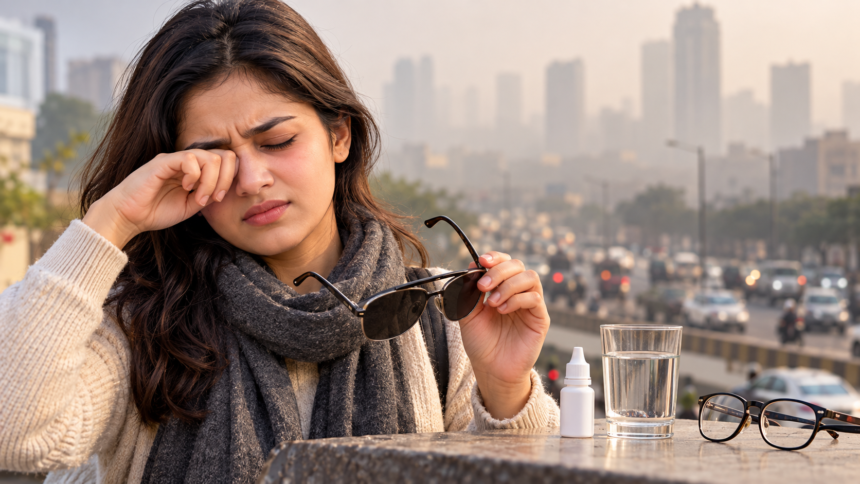
As winter approaches, rising air pollution and smog can affect more than just our respiratory health. Our eyes are also exposed to dust, smoke and airborne chemical particles, which can contribute to redness, itching, burning sensations and excessive watering. Certain everyday habits may worsen this discomfort, making eye protection especially important when air quality deteriorates.
Here are five common mistakes to avoid to help protect your eyes during periods of high pollution.
1. Rubbing Irritated Eyes
When your eyes feel itchy or gritty, rubbing them may seem like an easy way to get relief. However, this can move trapped particles across the eye’s surface, potentially scratching the cornea and increasing irritation.
Instead of rubbing your eyes, blink gently and rinse them with clean water if necessary. Avoid putting unnecessary pressure on already irritated eyes.
2. Going Outdoors Without Protective Eyewear
Sunglasses are often associated with protection from sunlight, but suitable eyewear can also help shield your eyes from dust, wind and airborne particles. Wraparound glasses offer additional coverage, particularly when travelling on a two-wheeler or walking outdoors.
Leaving your eyes exposed during polluted conditions can increase their contact with environmental irritants. Wearing protective eyewear is a simple precaution when spending time outside.
3. Using Eye Drops Without Proper Guidance
Using eye drops simply to reduce redness can sometimes make the problem worse. Certain redness-relief drops contain vasoconstrictors that temporarily narrow blood vessels, masking redness without addressing its underlying cause. Frequent use may also lead to rebound redness.
Steroid eye drops can carry additional risks when used without medical supervision. Lubricating drops may help relieve dryness, but it is best to seek advice from an eye-care professional or pharmacist about choosing and using the appropriate product.
4. Wearing Contact Lenses on Highly Polluted Days
Contact lenses can trap particles close to the eye’s surface, potentially increasing dryness, allergic irritation and the risk of infection. Switching to spectacles on days with heavy pollution may help reduce exposure.
People who continue wearing contact lenses should follow proper lens-cleaning and hygiene practices. Avoid wearing lenses if your eyes become significantly irritated, and seek professional advice if symptoms persist.
5. Ignoring Hydration, Sleep and Screen Breaks
Polluted, dry air can place additional stress on the tear film that keeps the eyes lubricated. Insufficient water intake, inadequate sleep and prolonged screen use may add to discomfort and dryness.
Following the 20-20-20 rule can help reduce digital eye strain: every 20 minutes, look at an object approximately 20 feet away for 20 seconds. Maintaining adequate hydration and getting sufficient sleep can also support general eye comfort.
How Ayurveda Approaches Eye Care
In Ayurveda, eye health, known as Netra Swasthya, is associated with maintaining a balance of Pitta, the dosha linked with heat and inflammation. Traditional approaches often emphasise soothing practices and reducing strain. However, these methods should be approached carefully, particularly when the eyes are already irritated.
Triphala wash: A cooled, finely strained Triphala preparation is traditionally used as an eye rinse. However, homemade preparations may introduce contamination or particles into the eyes. Avoid using them without appropriate professional guidance, especially if you have eye pain or a suspected infection.
Netra Tarpana: This traditional therapy involves placing medicated ghee around the eyes. It should be performed only by a qualified Ayurvedic practitioner, with attention to appropriate hygiene and safety.
Palming and Trataka: Palming involves warming the hands and gently resting them over closed eyes to help relax eye strain. Trataka, a traditional practice involving steady candle-gazing, is used to develop concentration. It should be approached cautiously and stopped if it causes discomfort.
Diet and hydration: Amla, carrots, leafy green vegetables, soaked almonds and small amounts of ghee are traditionally considered nourishing foods for eye health. Drinking enough water also supports normal bodily functions.
Ayurvedic practices may complement everyday eye-care habits, but they should not replace evidence-based medical treatment. Homemade eye rinses and unprescribed preparations can pose risks if they are contaminated or unsuitable for the condition.
If you experience persistent redness, eye pain, sensitivity to light, discharge or blurred vision, consult an eye doctor promptly.
Protecting your eyes during high-pollution periods starts with simple habits: avoid rubbing them, wear suitable outdoor eyewear, use eye drops responsibly, take precautions with contact lenses and give your eyes regular breaks.
Disclaimer: This article is intended for general educational purposes and does not replace professional medical advice, diagnosis or treatment. Ayurvedic practices and dietary suggestions may not be suitable for everyone. Consult a qualified healthcare professional before trying eye treatments, and seek prompt medical attention for persistent or severe symptoms.