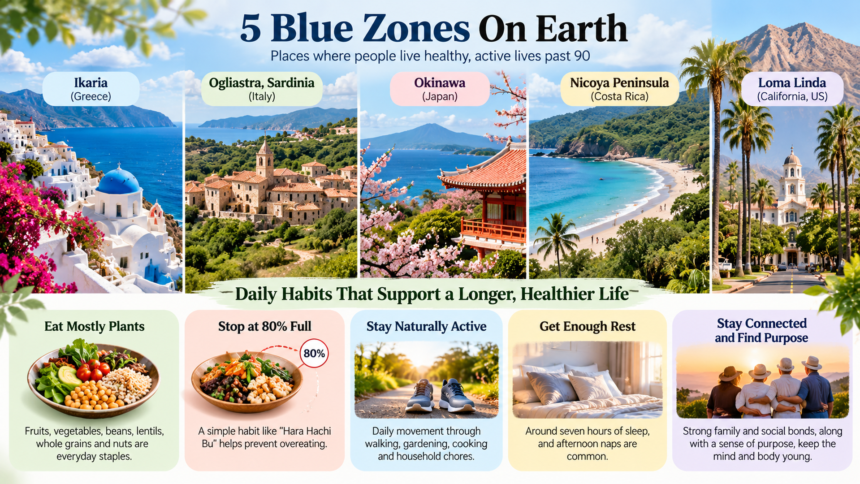
Why do some communities have unusually high numbers of people living into their 90s and beyond? From the Mediterranean islands of Greece and Italy to communities in Japan, Costa Rica and the United States, certain regions have attracted attention for their longevity and everyday lifestyle habits.
Known as Blue Zones, these places are associated with traditional diets, regular physical activity, close social connections and a strong sense of purpose. While no single habit guarantees a longer life, the patterns observed in these communities offer useful ideas for supporting health and well-being as we age.
What Are Blue Zones?
The term “Blue Zones” was popularised by longevity researcher Dan Buettner, who worked with National Geographic and other researchers to identify regions reported to have unusually high numbers of long-lived residents.
The name originated when researchers used blue circles to mark longevity hotspots on maps.
These communities differ in culture, geography and food traditions, but several lifestyle patterns appear repeatedly in descriptions of their daily lives. These include eating plenty of plant-based foods, staying active through everyday tasks, maintaining strong social relationships and making time for rest.
However, longevity is influenced by many factors, including healthcare, living conditions, genetics and socioeconomic circumstances. Blue Zone habits should be understood as useful lifestyle observations, not a guarantee of reaching a particular age.
Where Are the 5 Blue Zones in the World?

1. Ikaria, Greece
This Mediterranean island is known for its traditional food culture, local produce and relaxed pace of life. Walking, socialising and eating meals with family and friends are important parts of everyday life.

2. Ogliastra, Sardinia, Italy
This mountainous region has attracted attention for its long-lived residents. Daily walking across hilly terrain, traditional foods and strong community ties are often highlighted as features of local life.

3. Okinawa, Japan
Okinawa is particularly known for the longevity of some of its older women. Traditional eating practices, social support and a sense of purpose are frequently associated with the region’s approach to ageing.

4. Nicoya Peninsula, Costa Rica
Family connections, community involvement and a strong sense of purpose are central themes in descriptions of life in Nicoya. Traditional diets also feature foods such as beans, corn and squash.

5. Loma Linda, California, United States
This community is known for its health-conscious Seventh-day Adventist population. Many residents emphasise plant-forward eating, regular activity, social connection and, for some, religious community.
5 Daily Habits Inspired by Blue Zone Communities
The lifestyle patterns associated with Blue Zones are not about following a strict routine or finding a secret to immortality. They focus on simple habits that can be incorporated into everyday life.
1. Eat More Plant-Based Foods
Beans, lentils, vegetables, fruits, whole grains and nuts feature prominently in many traditional Blue Zone diets. These foods provide fibre, vitamins, minerals and other nutrients that support overall health.
Meat is generally less central to several of these traditional eating patterns, although diets vary across regions. Fish is also eaten in some coastal communities.
What you can try: Include dal, beans, seasonal vegetables and whole grains in your meals more regularly.
2. Practise Mindful Eating
In Okinawa, the phrase hara hachi bu is traditionally associated with eating until you feel about 80% full. The idea encourages people to pay attention to their hunger and fullness rather than routinely eating until they feel uncomfortable.
This is a cultural eating practice, not a precise medical measurement or a rule that everyone must follow.
What you can try: Eat at a comfortable pace, notice when your hunger eases and give yourself permission to have more food if you are still hungry.
3. Keep Moving Throughout the Day
In many Blue Zone communities, movement is part of daily life rather than something reserved for formal workouts. Walking, gardening, cooking, household chores and other everyday activities help people remain physically active.
Regular movement can support mobility, cardiovascular health and muscle function as people age.
What you can try: Take short walks, tend to plants, use the stairs when appropriate or break up long periods of sitting with movement.
4. Prioritise Sleep and Rest
Adequate sleep supports physical health, memory, mood and daily functioning. Some Mediterranean communities also have traditions of afternoon rest, although sleep and nap patterns differ among individuals and regions.
There is no single sleep schedule shared by everyone in the Blue Zones.
What you can try: Maintain a consistent sleep routine, make time to unwind before bed and aim for sufficient sleep for your age and needs.
5. Nurture Relationships and Find a Sense of Purpose
Family ties, friendships and community participation are recurring themes in descriptions of Blue Zone life. Having people to rely on and activities that provide meaning can support emotional well-being and reduce feelings of isolation.
A sense of purpose may come from caring for loved ones, learning something new, volunteering or participating in a community.
What you can try: Make time for people you care about and choose activities that give your day meaning and enjoyment.