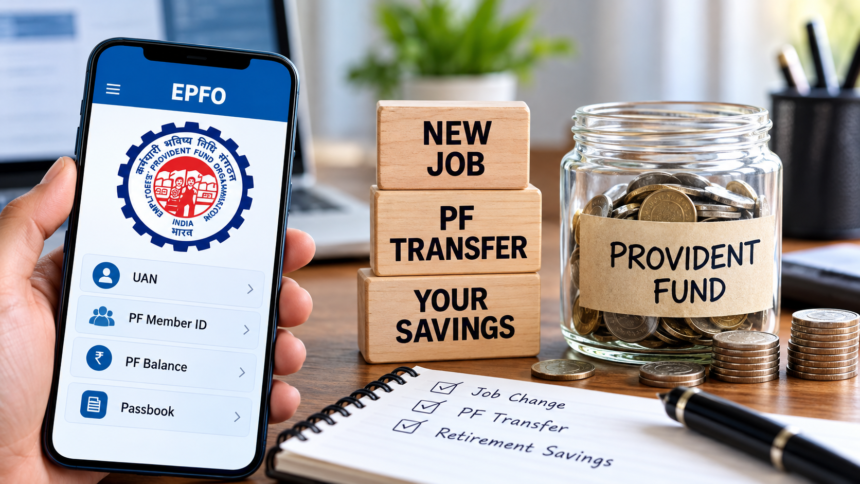
Employees switching jobs should check their PF balance, UAN details and employment records to ensure their retirement savings are properly transferred. Understanding the difference between a UAN and a PF Member ID can help prevent confusion and resolve account-related issues.
UAN and PF Member ID: Understanding the Difference
When employees switch jobs, their new employer may create a new Provident Fund (PF) Member ID. This is normal, provided the new ID is linked to their existing Universal Account Number (UAN).
A UAN is a permanent identification number for an employee’s PF accounts, while a Member ID is associated with a particular employment relationship. As a result, employees may see multiple Member IDs in the UMANG app without having a duplicate account.
However, employees should ensure that their previous PF balance and employment history are properly recorded. They should also inform their new employer about their existing UAN instead of obtaining a new one every time they change jobs.
The Employees’ Provident Fund Organisation (EPFO) simplified its online PF transfer process in January 2025, removing the requirement for employer approval in most online transfer claims. The change was expected to allow approximately 94% of transfer claims to reach EPFO directly without employer intervention.
Essential PF Checks After Changing Jobs
Employees can take the following steps to keep their PF records accurate and avoid difficulties when accessing their savings.
- Provide your existing UAN: Share your 12-digit UAN with your new employer during onboarding. Confirm that the new PF Member ID is linked to the same number.
- Verify your Date of Exit: Check whether your previous employer has correctly updated your Date of Exit in EPFO records. Missing or incorrect information can create difficulties during the transfer process. Eligible members may also update their exit date themselves, subject to EPFO conditions.
- Review your PF passbook: Visit the official EPFO passbook portal to check contributions from previous and current employers. Look for transfer entries and confirm whether the earlier balance has been credited to the current account.
- Track your PF transfer: If the old balance has not moved, check the claim status and determine whether a transfer application is required. The online transfer process uses Form 13, although the procedure may vary depending on the circumstances.
In April 2025, EPFO further simplified the transfer process through a revamped Form 13 facility. Under the revised system, once the source EPFO office approves a transfer, the balance is intended to move to the member’s current account without requiring separate approval from the destination office.
What Should You Do If You Have Two UANs?
Having two UANs is different from having multiple PF Member IDs. If two UANs have been allotted to the same employee, the individual should inform their current employer and contact EPFO to have the records verified and corrected.
EPFO guidance advises employees with multiple UANs to report both numbers so that the records can be checked and the previous UAN can be blocked where appropriate.
Employees should first establish which UAN is active and identify the Member IDs linked to each number. They should also verify whether contributions have been credited under both accounts.
Opening another account or withdrawing the old PF balance without checking the records may complicate the process. Employees should instead seek assistance from their employer or EPFO to resolve any discrepancies.
How to Handle an Unknown PF Account
An unfamiliar PF Member ID linked to your UAN requires attention, especially if it is associated with an employer you have never worked for.
EPFO provides a facility to delink Member IDs that have been incorrectly or fraudulently linked to a UAN. Before taking action, employees should verify the employment and contribution details to establish whether the account is genuine.
If an account appears to have been linked without authorisation, the issue should be reported through EPFO’s official grievance mechanism. Employees should never share their UAN password, Aadhaar details or OTP with anyone claiming to offer assistance with account corrections.
Why Transferring PF After a Job Change Matters
Transferring PF savings after changing jobs helps employees consolidate their retirement funds and maintain a clearer record of their employment history. Leaving money in old accounts can make it more difficult to track savings across different employers.
Maintaining accurate records is also important for pension benefits. The Employees’ Pension Scheme (EPS) considers eligible pensionable service, and the length of that service can influence future pension entitlements.
Employees should therefore review both their PF balance and service history after every job change. Regular checks can help identify missing contributions, incomplete transfers or incorrect account details before these issues create complications during future withdrawals or pension claims.