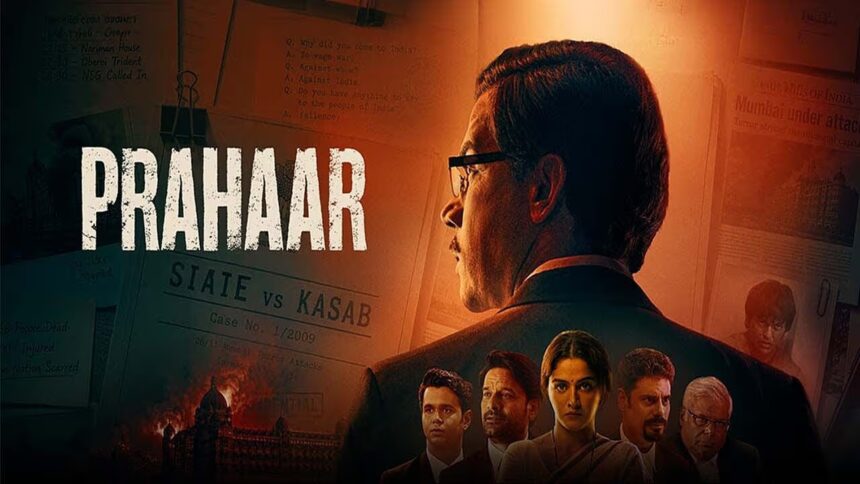
Prahaar: The Untold Story of Ujjwal Nikam brings the legal battle following the 26/11 Mumbai terror attacks to the big screen, focusing on the prosecution of Ajmal Kasab and the efforts of lawyer Ujjwal Nikam. Rajkummar Rao delivers a compelling performance in the lead role, supported by strong performances from Wamiqa Gabbi and Jaideep Ahlawat. However, slow pacing and uneven storytelling prevent the film from reaching its full emotional potential.
Directed by Avinash Arun Dhavare, the film revisits a significant chapter in India’s recent history through courtroom proceedings and the personal challenges faced by the lawyer responsible for prosecuting Kasab. While the subject offers considerable dramatic potential, the film’s execution receives a mixed response.
Prahaar Movie Review: Story and Plot
The film opens with the 26/11 Mumbai terror attacks and the subsequent arrest of Ajmal Kasab, played by Lalit Prabhakar. The narrative then follows the legal battle to bring Kasab to justice, with Ujjwal Nikam, portrayed by Rajkummar Rao, leading the prosecution.
The courtroom proceedings highlight the challenges Nikam faces as Kasab gives conflicting accounts of his identity and reasons for coming to Mumbai. At different points, Kasab claims to be 17 years old and says he travelled to the city hoping to become an actor.
Alongside the legal case, the film explores Nikam’s family life. His relationship with his son becomes a source of personal conflict, while his wife faces cancer. These parallel storylines attempt to show the emotional demands of balancing a high-profile criminal case with responsibilities at home.
Although the subject provides a strong foundation for a courtroom drama, the storytelling does not consistently capture the gravity of the events it portrays.
Direction and Screenplay: Where the Film Falls Short
Avinash Arun Dhavare, known for projects including Paatal Lok and Pritam & Pedro, takes on a story that combines courtroom tension, national tragedy and personal struggles. However, the film’s first half lacks the emotional depth needed to draw viewers fully into the narrative.
The story moves quickly into legal proceedings, but the slow pace makes several portions feel stretched. The impact of the 26/11 attacks also fails to translate into the kind of emotional connection that could have made the film more powerful.
The second half gains momentum as the narrative explores the events surrounding the attacks in greater detail. This improvement makes the latter portion more engaging, although the uneven pacing affects the overall experience.
The music and background score do little to strengthen the emotional impact, while the dialogues remain reasonably effective. Stronger screenplay development and more consistent storytelling could have made the historical drama considerably more compelling.
Rajkummar Rao, Wamiqa Gabbi and Jaideep Ahlawat Deliver Strong Performances
Rajkummar Rao is the film’s biggest strength. His portrayal of Ujjwal Nikam conveys the lawyer’s determination and anger, particularly in scenes connected to the 26/11 case. He brings conviction to the character and gives the courtroom sequences much of their intensity.
Wamiqa Gabbi, playing Nikam’s wife, also delivers a strong performance. She brings depth to the personal storyline, which explores the pressures faced by the family amid the demands of a high-profile legal battle.
Jaideep Ahlawat makes a noticeable impression whenever he appears on screen. Sikandar Kher and the supporting cast also contribute effectively to the narrative.
The performances help maintain interest even when the screenplay loses momentum. Rajkummar Rao’s work, in particular, gives viewers a reason to stay invested in the film.
Final Verdict: Is Prahaar Worth Watching?
Prahaar: The Untold Story of Ujjwal Nikam benefits from a significant real-life subject and a committed lead performance, but its uneven direction and slow first half limit its impact.
The film has the ingredients for a gripping courtroom drama, yet its screenplay, cinematography, background music and overall presentation could have been stronger. The second half improves the pace, but the emotional weight of the 26/11 attacks is not consistently conveyed.
For viewers who enjoy Rajkummar Rao’s performances and courtroom dramas, the film may be worth considering. However, those expecting a deeply moving and consistently gripping portrayal of one of India’s most significant terror attacks may find the overall execution underwhelming.