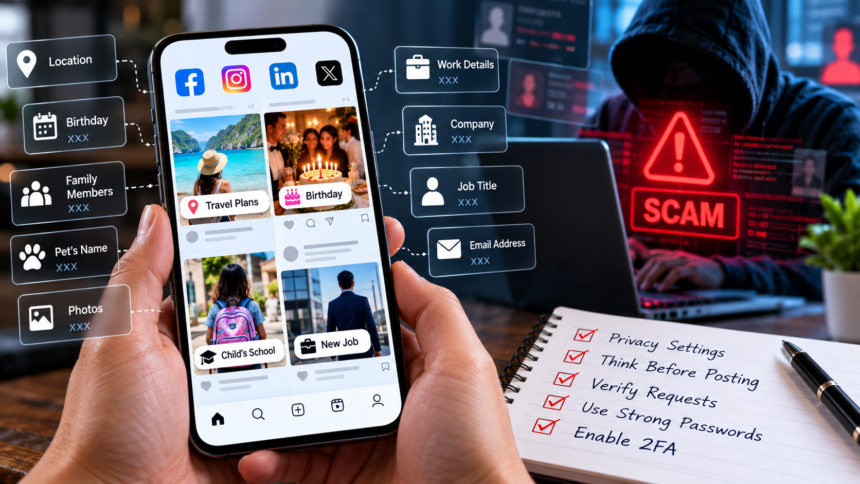
Social media has become an important part of everyday life, but sharing personal information online can also expose users to identity theft, impersonation and financial fraud. Even ordinary posts about birthdays, family events or career updates can give scammers valuable clues about their targets.
Cybercriminals can combine publicly available information to create believable stories, impersonate trusted people and trick victims into sharing sensitive details or transferring money. As artificial intelligence (AI) makes it easier to imitate voices and identities, recognising these scams is becoming increasingly important.
How Everyday Social Media Posts Can Help Scammers
Personal details shared on social media may appear harmless, but they can reveal information that criminals use to target individuals. Birthdays, school names, family relationships and pet names can provide clues about a person’s identity and, in some cases, their password habits or security-question answers.
Scammers may use these details to impersonate a user or someone close to them. For example, a criminal who knows a child’s name, school and recent activities could send a convincing message pretending to be a family member. The message might describe an emergency, request an urgent payment or ask for confidential information.
The danger is that these messages may appear genuine because they contain details familiar to the recipient. This can make people less likely to question an unexpected request.
How LinkedIn Can Expose Employees to Financial Fraud
The risks are not limited to personal profiles. Professional platforms such as LinkedIn can reveal information about an organisation’s structure, employees and financial responsibilities.
Job titles, reporting relationships, recruitment announcements and workplace updates may help criminals identify employees who approve payments or manage company accounts. Newly hired employees can be particularly vulnerable while learning their organisation’s procedures.
A fraudster might impersonate a senior executive and instruct an employee to make an urgent payment. Alternatively, criminals may target finance staff with messages requesting transfers to fraudulent bank accounts.
Publicly available work email addresses can also help scammers identify potential victims and create messages that appear to come from legitimate business contacts.
How Artificial Intelligence Makes Scams More Convincing
Information gathered from social media can become more dangerous when combined with stolen passwords and AI-powered impersonation tools.
Passwords exposed in previous data breaches may continue circulating online. People who reuse the same password across multiple accounts risk having several services compromised if one set of credentials is stolen.
AI voice-cloning technology introduces another challenge. Audio taken from a public video, interview or social media post may be used to create an imitation of someone’s voice. Criminals can then use that imitation to pose as a family member requesting money or a senior executive issuing payment instructions.
As these tools become more accessible, scammers may find it easier to produce convincing impersonations without extensive technical expertise. Familiarity with someone’s voice or writing style should therefore not be treated as proof of identity.
Practical Ways to Protect Yourself Online
Completely avoiding social media is not necessary. Instead, users should understand what information is publicly visible and take practical steps to reduce the risk of misuse.
Here are five precautions that can help protect personal information and finances:
- Review privacy settings: Restrict access to personal details, family photographs, birthdays and other sensitive information wherever possible.
- Verify urgent requests for money: If someone claiming to be a family member requests an emergency transfer, call them using their usual phone number before sending money. Families can also establish a private code word for unexpected requests.
- Confirm workplace payment instructions: Verify new payment requests and changes to bank details through a separate, trusted communication channel. Do not rely solely on contact information included in a suspicious message.
- Strengthen account security: Use a unique password for every important account and enable multi-factor authentication. An authenticator app or security key can provide additional protection.
- Think carefully before posting: Avoid publishing sensitive personal details, travel plans or information that reveals security answers and workplace responsibilities.
Stay Alert Before Sharing Personal Information
Social media can be useful for staying connected and building professional relationships, but information shared publicly may be used in unexpected ways. Small details can become more revealing when combined with other publicly available information.
Users should be cautious about unexpected requests for money, confidential information or urgent action, even when a message appears to come from someone they know. Verifying identities independently and protecting account credentials can help reduce the chances of falling victim to online fraud.
The most effective approach is not to stop using social media, but to share information thoughtfully and verify unusual requests before taking action.