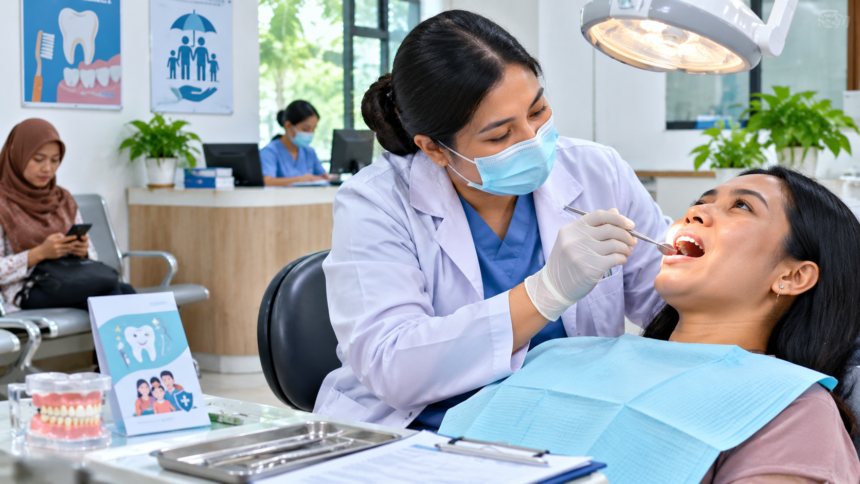
Access to regular dental care remains a major public health concern, according to a new study examining dental service utilisation in Indonesia. The research highlights how the COVID-19 pandemic widened existing gaps in access to professional dental treatment, particularly among financially vulnerable communities.
Dental Visits Declined During the Pandemic
The study analysed national health insurance claims and found that only 2.3% of members accessed primary dental care in 2019. This figure dropped to 1.6% in 2020 after the pandemic began.
Researchers found that the decline affected certain population groups more severely, highlighting inequalities in access to routine oral healthcare.
Lower-Income Communities Faced Greater Barriers
Government-subsidised insurance members and people enrolled in lower insurance classes experienced greater difficulties accessing dental services.
Residents living outside Indonesia’s Java-Bali region also faced significant barriers. The findings point towards differences in healthcare availability and access across geographical areas.
Why Regular Dental Check-ups Matter
Dental check-ups help identify cavities, gum problems and other oral health concerns before they become more complicated.
Dentists generally recommend:
- Brushing twice daily with fluoride toothpaste.
- Cleaning between teeth regularly.
- Limiting frequent sugary snacks and drinks.
- Scheduling routine dental examinations.
- Seeking professional advice for persistent tooth pain or bleeding gums.
Improving Access to Oral Healthcare
Researchers suggest that better healthcare infrastructure, targeted support programmes and improved financial assistance could help reduce inequalities in dental care.
The findings highlight that oral health services need to be accessible and affordable so that more people can receive timely preventive treatment.