
Dhaka: Dhakeshwari Temple is one of Bangladesh’s most important Hindu religious sites, attracting worshippers and visitors interested in the country’s spiritual traditions and history. Dedicated to Goddess Dhakeshwari, traditionally associated with Goddess Durga, the temple is believed by some devotees and researchers to be a Shakti Peeth. Its origins are linked to the Sena Dynasty, while the present complex reflects centuries of historical changes and restoration.
With Durga Puja 2026 approaching, the temple offers an opportunity to explore Bangladesh’s Hindu heritage while discovering the historic landmarks of Dhaka. Visitors can also plan trips to nearby forts, museums, historic buildings and the city’s busy riverfront. Here’s a guide to the temple’s history, nearby attractions and budget-friendly travel options.
Dhakeshwari Temple: History and Religious Significance
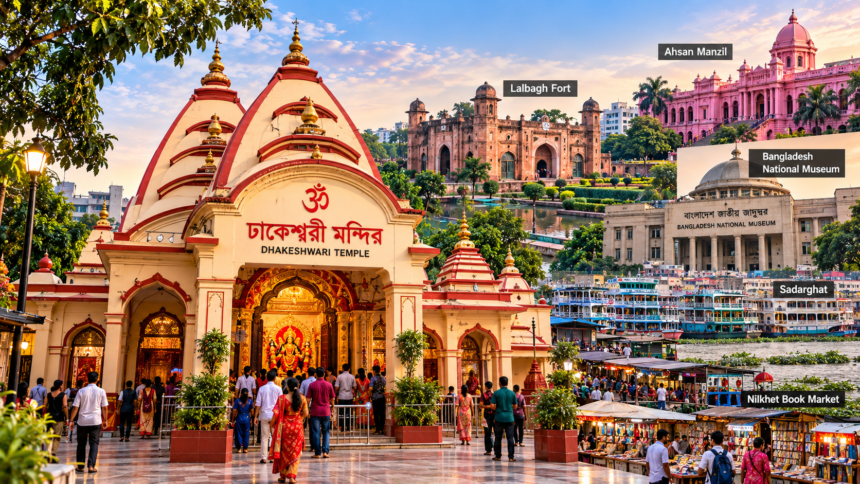
Located in the Lalbagh area of Old Dhaka, Dhakeshwari National Temple is recognised as Bangladesh’s national Hindu temple. Historical accounts traditionally associate its establishment with King Ballal Sen of the Sena Dynasty around the 12th century. The name Dhaka is also linked in local tradition to the temple’s presiding deity, Goddess Dhakeshwari.
Some religious traditions and researchers identify the shrine as a Shakti Peeth, connecting it with the legend of Goddess Sati. However, this identification is not universally established as a historical fact.
The temple complex includes a principal shrine, courtyards and four Shiva temples. Its history has also been affected by major events in Bangladesh. During the 1971 Liberation War, the original idol was reportedly moved to Kolkata, and the temple sustained damage. The complex was subsequently restored and continues to serve as an important place of worship.
Although devotees visit throughout the year, Durga Puja is a particularly significant occasion. During the festival, worshippers gather for prayers, rituals and celebrations dedicated to Maa Durga.
Places to Visit Near Dhakeshwari Temple
Visitors can combine a temple visit with several historic and cultural attractions across Dhaka.
Lalbagh Fort
Lalbagh Fort is a Mughal-era complex located within easy reach of Dhakeshwari Temple. Commissioned by Prince Muhammad Azam in the 17th century, the site is known for its gardens, the Tomb of Pari Bibi, the Diwan-i-Aam and a historic hammam. Visitors may want to set aside around one to two hours to explore the grounds.
Ahsan Manzil
Popularly known as the Pink Palace, Ahsan Manzil once served as the residence of the Nawabs of Dhaka and now functions as a museum. Its distinctive pink exterior and Indo-Saracenic architectural features make it an interesting destination for those exploring the city’s history. Check the latest admission fees and opening hours before visiting.
Curzon Hall
Situated within the University of Dhaka, Curzon Hall combines Mughal-inspired details with European architectural influences. Originally planned as a town hall, it is now used for university activities. Visitors should follow campus rules and respect any restrictions on access to academic buildings.
Bangladesh National Museum
Located in the Shahbag area, the Bangladesh National Museum offers exhibits covering the country’s history, archaeology, art and cultural heritage.
According to the ticket information provided in the source material, admission costs ৳300 for visitors from SAARC countries and ৳500 for visitors from countries outside the SAARC region, excluding the listed service charge. Travellers should confirm current prices through the museum’s official ticketing service.
Sadarghat River Port
Sadarghat is one of Dhaka’s busiest riverfront areas. Located beside the Buriganga River, it provides a glimpse of everyday life through its passenger boats, ferries and crowded jetties. Visiting during daylight and keeping personal belongings secure are sensible precautions in this busy area.
Nilkhet Book Market
Located near the University of Dhaka, Nilkhet is popular among students, readers and book enthusiasts. Its shops offer second-hand books, academic materials and novels, making it a useful stop for visitors looking for affordable reading material.
Dhakeshwari Temple Trip: Budget and Travel Tips
A visit to Dhakeshwari Temple can be planned economically by grouping nearby attractions into a single itinerary and using public transport where practical.
| Expense | Budget guide |
|---|---|
| Temple entry | Free, according to the visitor information provided |
| Metro fare | Approximately ৳20–৳100 per journey, depending on the route |
| Bangladesh National Museum | ৳300 for SAARC visitors and ৳500 for other foreign visitors, plus applicable service charges |
| Local rickshaw or taxi | Varies by distance, traffic and negotiation |
| Food | Costs depend on the restaurant and dishes ordered; local eateries may offer lower-cost options |
These figures are indicative and should be checked before travel.
Travellers can reduce expenses by visiting attractions in the same neighbourhood together, using the metro for suitable journeys and taking a rickshaw for the final stretch when needed. It is also sensible to set aside money for food, transport, entry tickets and any festival-related expenses.
Visitors travelling from India should budget separately for international transport, accommodation, visa requirements where applicable and travel insurance. These costs are not included in the local sightseeing estimates.
Why Visit Dhakeshwari Temple During Durga Puja 2026?
Dhakeshwari Temple provides an opportunity to learn about Bangladesh’s Hindu traditions while exploring the historic areas of Dhaka. During Durga Puja, visitors can experience the religious significance of the shrine and combine their visit with nearby forts, museums, markets and riverfront attractions.
Planning the itinerary in advance, checking opening times and confirming travel expenses can help make the trip more convenient and affordable.
Disclaimer
This article is intended for general travel and informational purposes. Historical accounts, religious traditions, opening hours, admission fees and transport costs may vary by source or change over time. Confirm current prices, travel requirements and festival schedules with official authorities before departure. References to the temple’s origins and its possible status as a Shakti Peeth reflect religious traditions and interpretations rather than universally established historical facts.