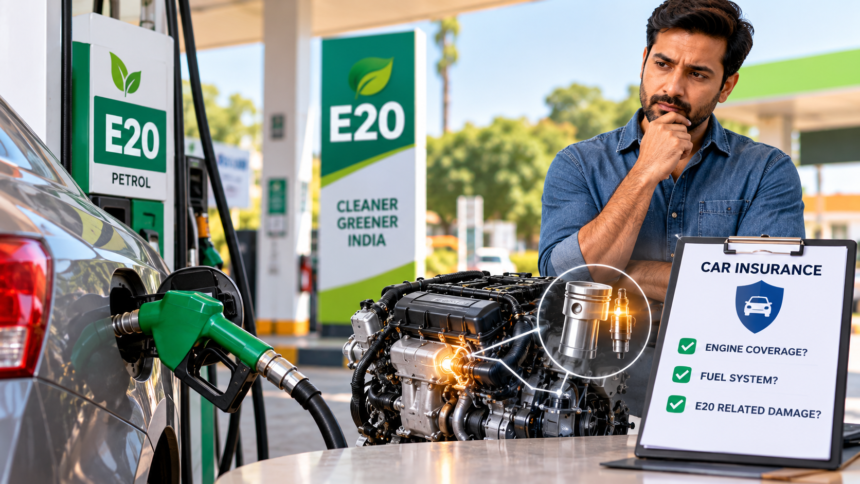
As India continues to expand the use of E20 petrol, owners of older petrol-powered vehicles are raising concerns about the possible effects of ethanol-blended fuel on engines and fuel systems. Another important question is whether repairs resulting from fuel-related damage will be covered by comprehensive motor insurance.
However, a comprehensive policy does not cover every type of vehicle damage. According to Shanai Ghosh, Member of the Executive Committee of the General Insurance Council and MD and CEO of Zuno General Insurance, claim approval depends on the policy’s terms and conditions, the circumstances of the incident and the actual cause of the damage.
Motorists should therefore check whether their vehicles are compatible with E20 petrol and understand their insurance coverage before assuming that fuel-related repair costs will be reimbursed.
1. Does Car Insurance Cover E20-Related Engine Damage?
Comprehensive motor insurance generally protects against accidental damage caused by events covered under the policy. However, mechanical breakdown, routine wear and tear, gradual deterioration and problems associated with maintenance or vehicle compatibility are generally excluded from standard coverage.
If prolonged use of E20 petrol causes damage to an engine, fuel pump or other fuel-system components, the insurer will assess the circumstances before deciding whether to approve the claim.
The assessment may involve a physical inspection, supporting documents and a technical evaluation. Insurers may also consult authorised service centres or vehicle manufacturers to establish the cause of the problem.
Damage linked to fuel incompatibility or gradual mechanical deterioration may therefore be treated differently from damage caused by an insured accident. The final decision will depend on the evidence and the specific exclusions in the policy.
2. Can Older Petrol Cars Face Insurance Claim Problems?
Owners of petrol cars that are five years old or older, particularly those unsure about E20 compatibility, should check the manufacturer’s recommendations before changing their fuel usage.
Ghosh advised motorists to follow the fuel specifications and maintenance instructions provided by vehicle manufacturers.
If an engine or fuel-system problem develops, the insurer will examine the technical findings, available evidence and policy conditions to determine whether the damage qualifies for compensation.
Importantly, a vehicle’s age alone does not decide whether an insurance claim will be accepted or rejected. The cause of the damage and the applicable policy exclusions are key considerations.
Motorists can reduce uncertainty by consulting the owner’s manual or an authorised service centre to confirm whether their vehicle is suitable for E20 petrol.
3. Do E20-Compatible Cars Need Additional Insurance?
Even owners of newer vehicles designed to use E20 petrol should review their comprehensive motor insurance policies carefully.
According to Ghosh, insurers are developing specialised covers and add-ons to address changing customer needs as vehicle technologies and fuel options evolve. Depending on the insurer and the product, additional protection may be available for certain risks that are not included in a standard policy.
However, an add-on does not automatically cover every type of fuel-related problem. Customers should check its coverage limits, conditions and exclusions before purchasing it.
Motorists should also ask their insurer directly whether the specific engine or fuel-system risk they are concerned about is covered under their existing policy or requires additional protection.
4. What Should Car Owners Check Before Making an Insurance Claim?
Before seeking compensation for suspected E20-related damage, vehicle owners should verify their car’s fuel compatibility, review their insurance documents and clarify the extent of protection available for mechanical or fuel-related problems.
It is also important to understand that manufacturer warranties, vehicle recall programmes and motor insurance policies have different terms and conditions. Depending on the circumstances, the appropriate remedy may vary.
As E20 petrol becomes more widely available, checking fuel recommendations and insurance exclusions in advance can help owners of older vehicles make informed decisions and avoid unexpected repair expenses.
Disclaimer
This article is intended for general informational purposes only and does not constitute insurance, legal or technical advice. Insurance coverage depends on the specific policy wording, exclusions, technical assessment and circumstances of the damage. Vehicle owners should consult their manufacturer, authorised service centre and insurance provider for guidance applicable to their vehicle and policy.