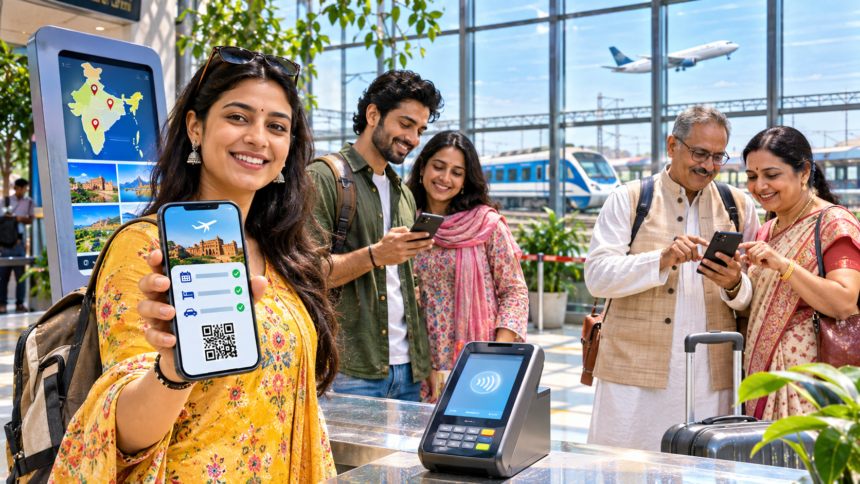
India is working towards a more connected digital tourism system that could make it easier for visitors to plan trips, make payments, access travel documents and discover destinations. The proposed National Digital Tourism Stack aims to connect different digital services used throughout a traveller’s journey, bringing more convenience to domestic and international tourists.
The initiative comes as India’s tourism sector continues to grow. The country recorded approximately 2.95 billion domestic tourist visits and 9.95 million foreign tourist arrivals in 2024, highlighting the scale of its travel market.
Bringing Different Travel Services Together
The proposed digital framework is expected to connect existing platforms such as UPI, DigiLocker, Digi Yatra and the Open Network for Digital Commerce (ONDC).
By linking these services, the system aims to support different stages of travel, including identity verification, airport entry, bookings, payments, shopping and personalised recommendations.
Making Travel Planning More Convenient
At present, travellers often use separate websites and applications for different parts of a trip. A more connected system could reduce the need to repeatedly enter information or switch between multiple platforms.
Digital payments and access to verified travel documents could also make transactions and travel-related services more convenient.
Tourism’s Contribution to the Indian Economy
Tourism contributed an estimated ₹15.73 lakh crore to India’s economy during FY 2023–24, representing around 5.22% of GDP. The sector also supported approximately 84.6 million direct and indirect jobs.
These figures underline why improving tourism infrastructure and services has become an important economic priority.
Technology Could Shape the Future of Indian Tourism
The proposed Digital Tourism Stack is part of a broader effort to connect tourism promotion with better digital infrastructure. Initiatives such as Incredible India 2.0 and Swadesh Darshan 2.0 are also part of the country’s tourism development strategy.
If implemented effectively, the connected system could help travellers access services more easily while supporting tourism businesses across different parts of India.