

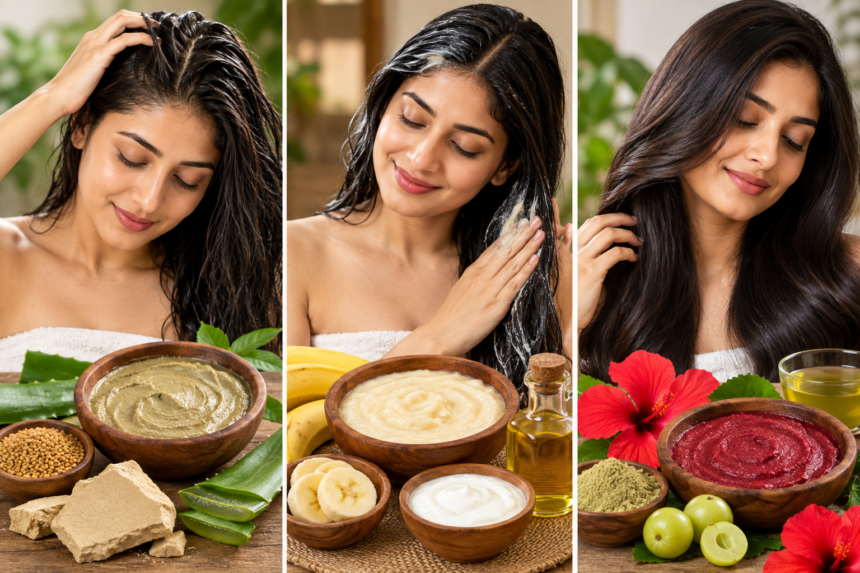
Hair problems don’t look the same for everyone. An oily scalp may need ingredients that help absorb excess sebum, while dry and brittle hair benefits more from conditioning oils and moisture-rich ingredients. If your hair looks rough, tired or lacks shine, a gentle nourishing mask may help improve its overall appearance.
Ayurveda traditionally approaches hair and scalp care by considering an individual’s prakriti (body constitution) and possible dosha imbalances. At the same time, modern hair science focuses on factors such as sebum production, scalp health, hair porosity and damage to the cuticle.
The result is a simple idea: your hair concern should determine the kind of care you use.
From Multani mitti and methi for oily scalps to sesame oil, yogurt, hibiscus and amla for dry or dull strands, here are three Ayurvedic-inspired hair masks you can try at home.
Understanding Your Hair and Scalp Type
Before choosing a hair mask, it helps to identify what your scalp and strands actually need.
Oily Scalp: The Kapha Perspective
If your scalp becomes greasy soon after washing, excess sebum may be the main concern. An oily scalp can also feel heavy and may be more prone to buildup.
In Ayurvedic traditions, excess Kapha is associated with qualities such as heaviness and oiliness. Ingredients traditionally considered cleansing and absorbent can therefore be incorporated into scalp-care routines.
Dry and Frizzy Hair: The Vata Connection
Dry, coarse or frizzy hair often struggles to retain moisture. Highly porous or damaged hair can allow moisture to enter and escape quickly, leaving the strands rough and prone to breakage.
Ayurveda associates excessive Vata with qualities such as dryness and roughness. Traditionally, nourishing oils and conditioning ingredients are used to counter these characteristics.
Dull and Damaged Hair: The Pitta Angle
Hair that looks lifeless can be affected by frequent heat styling, chemical treatments, pollution, sunlight and other environmental factors. Damage to the outer cuticle can make the surface less smooth, reducing its natural shine.
In Ayurveda, excess Pitta is traditionally associated with heat. Cooling and plant-based ingredients are commonly used in Pitta-focused hair-care practices.
3 Ayurvedic Hair Masks for Different Hair Concerns
1. Multani Mitti, Methi and Aloe Vera Mask for Oily Scalp
If your roots become greasy quickly and your hair feels weighed down shortly after washing, this scalp-focused mask can be a useful addition to your weekly routine.
Ingredients
- 2 tablespoons Multani mitti (Fuller’s Earth) – Traditionally used to absorb excess oil and impurities.
- 1 teaspoon methi (fenugreek) powder – Contains plant compounds and has long been used in traditional hair-care practices.
- 2 tablespoons fresh aloe vera gel – Provides a soothing, lightweight base for the mask.
How to Use It
Mix the ingredients with enough lukewarm water to create a smooth paste. Apply it primarily to the scalp rather than the lengths of the hair.
Leave the mask on for around 20 minutes, then rinse thoroughly with lukewarm water.
If you prefer an alternative, a fenugreek-based rinse can also be incorporated into your hair-care routine.
Tip: Avoid leaving clay-based masks on until they become completely dry and tight, particularly if your scalp is sensitive.
2. Banana, Yogurt and Sesame Oil Mask for Dry Hair
Dry, rough and brittle strands generally need conditioning rather than aggressive cleansing. This mask combines banana, yogurt and sesame oil to provide a richer treatment for dehydrated-looking hair.
Ingredients
- 1 ripe banana, mashed – Helps create a smooth, conditioning paste.
- 2 tablespoons whisked yogurt or curd – Adds moisture and conditioning properties.
- 1 tablespoon cold-pressed sesame oil (Tila Taila) – A traditional Ayurvedic hair oil rich in fatty acids.
How to Use It
Combine all three ingredients until the mixture is evenly blended. Apply it from the roots through the lengths and ends, concentrating on areas that feel particularly dry.
Wrap the hair loosely in a warm, damp towel and leave the treatment on for approximately 30 minutes. Rinse thoroughly and follow with a gentle shampoo if required.
Another option for dry hair is a conditioning combination of coconut oil, amla and honey.
3. Hibiscus, Amla and Green Tea Mask for Dull Hair
If your hair has lost its natural shine after repeated styling, colouring or exposure to environmental stressors, a plant-based conditioning mask may help make the strands look smoother and healthier.
Ingredients
- 3 tablespoons fresh hibiscus petal and leaf paste – Hibiscus contains natural plant mucilage that can give hair a smoother feel.
- 1 tablespoon amla powder – Traditionally valued in Ayurvedic hair care and naturally rich in antioxidant compounds.
- ½ cup cooled, brewed green tea – Provides plant polyphenols and can be used as a mild botanical addition to hair treatments.
How to Use It
Prepare a smooth paste by combining the hibiscus, amla and cooled green tea. Spread it evenly through the hair, focusing on the lengths if they are damaged or dry.
Allow it to sit for around 30 minutes, then rinse thoroughly. A mild cleanser can be used afterward if needed.
For another traditional option, you can consider Bhringraj with sesame oil as a warm oil massage.
Which Hair Mask Should You Choose?
| Hair Concern | Ayurvedic Association | Key Ingredients | Main Purpose |
|---|---|---|---|
| Oily and greasy scalp | Kapha | Multani mitti, methi, aloe vera | Helps manage excess oil and buildup |
| Dry and frizzy hair | Vata | Banana, yogurt, sesame oil | Conditioning and moisture support |
| Dull or damaged hair | Pitta | Hibiscus, amla, green tea | Smoother feel and improved-looking shine |
How to Get Better Results From a Hair Mask
Using the right ingredients is only part of the process. Application also matters.
Warm Your Oil Gently
If you’re using an oil treatment, slightly warming the oil can make the massage more comfortable. Avoid making it hot, as excessive heat can irritate the scalp.
Massage With Your Fingertips
Use your fingertips to gently massage the scalp for 5–10 minutes. Avoid scratching with your nails or applying excessive pressure.
Don’t Overuse Hair Masks
More treatment doesn’t necessarily mean better results. A reasonable starting point is:
- Oily scalp: About once a week
- Dry hair: Once or twice a week, depending on how your hair responds
- Maintenance treatments: As needed after washing
Rinse Without Rough Handling
Wet hair is more vulnerable to mechanical damage. Avoid aggressive rubbing or pulling while washing out a mask. Use a gentle shampoo when necessary.
Hair Health Also Depends on Nutrition
Topical hair masks can support scalp and hair care, but they cannot replace a balanced diet.
Nutritional deficiencies, including inadequate levels of iron, vitamin D and zinc, can be associated with hair thinning. Adequate protein, vitamins and minerals are important for maintaining normal hair growth.
Instead of relying only on homemade treatments, focus on a balanced diet containing a variety of whole foods. Curry leaves, sesame seeds and ghee can be included as part of a varied diet, but no single food can provide all the nutrients your hair needs.
The Bottom Line
Whether your concern is an oily scalp, dry and frizzy strands or dull-looking hair, choosing a mask according to your specific hair needs can make your routine more targeted.
Multani mitti and methi can be useful choices for an oilier scalp, while banana, yogurt and sesame oil offer a more conditioning approach for dry hair. Hibiscus and amla can be used in a traditional botanical mask when your main goal is softer, shinier-looking hair.
Think of these treatments as part of a broader hair-care routine rather than a guaranteed solution for hair loss or scalp disorders. If you experience persistent dandruff, significant hair fall, scalp irritation or sudden changes in hair growth, it’s best to consult a dermatologist.
Disclaimer: These Ayurvedic-inspired home remedies are for general hair-care purposes and may not be suitable for everyone. Patch-test new ingredients before use and stop if irritation occurs. Homemade masks should not be considered a substitute for professional medical treatment for persistent scalp or hair conditions.