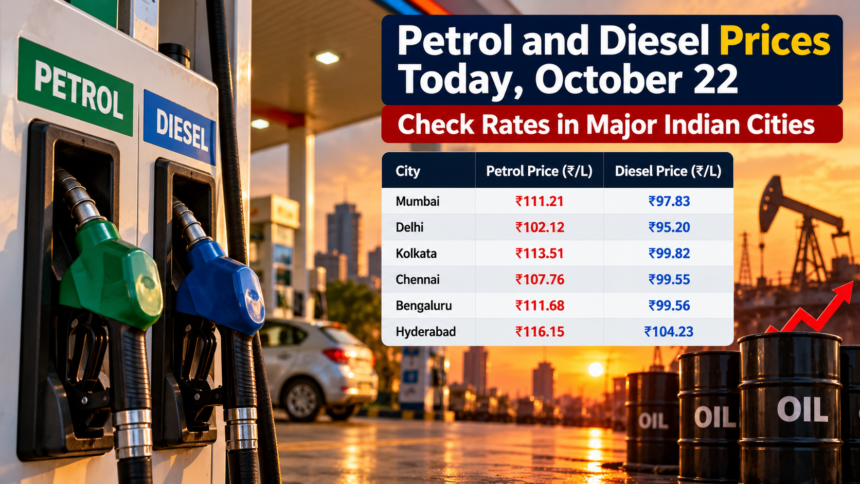
Petrol and diesel prices in major Indian cities remained largely unchanged on October 22, 2026, despite a fresh increase in international crude oil prices. Growing tensions in West Asia and concerns over the safety of oil shipments have pushed global energy markets higher, raising questions about the potential impact on India’s fuel costs.
Brent crude futures rose by more than $1 to $110.50 per barrel, while US West Texas Intermediate (WTI) crude increased by over $1 to $98.36 per barrel on October 22. The gains came amid intensified Houthi attacks in Saudi Arabia and concerns about the security of oil shipments through the Gulf region and key maritime routes.
India depends heavily on imported crude oil to meet its energy requirements. A prolonged rise in international prices could increase import expenses and put additional pressure on domestic oil marketing companies (OMCs).
Petrol and Diesel Prices Today in Major Cities
Retail fuel prices remained stable despite the rise in global crude oil benchmarks. Here are the reported petrol and diesel rates for major Indian cities on October 22.
| City | Petrol Price (₹/Litre) | Diesel Price (₹/Litre) |
|---|---|---|
| Mumbai | ₹111.21 | ₹97.83 |
| Delhi | ₹102.12 | ₹95.20 |
| Kolkata | ₹113.51 | ₹99.82 |
| Chennai | ₹107.76 | ₹99.55 |
| Bengaluru | ₹111.68 | ₹99.56 |
| Hyderabad | ₹116.15 | ₹104.23 |
Fuel prices can vary between cities because of differences in local taxes and other applicable charges. Consumers should check the latest rates with local fuel stations before refuelling.
Rising Crude Oil Costs Put Pressure on Oil Companies
Higher crude procurement and transportation expenses are putting pressure on India’s oil marketing companies as retail fuel prices remain largely unchanged.
According to a Times of India report citing brokerage firm Jefferies, fuel retailers are facing estimated losses of around ₹26 per litre on petrol and ₹30 per litre on diesel amid the ongoing West Asia conflict.
Indian Oil Corporation, Bharat Petroleum and Hindustan Petroleum have kept retail prices largely stable, leaving the companies to absorb much of the increase in input costs.
If crude oil prices and shipping expenses remain elevated, the financial burden on these companies could increase further. Continued supply disruptions may also complicate future decisions on domestic fuel pricing.
What Rising Crude Oil Prices Mean for Consumers
Despite Brent crude trading at around $110.40 per barrel in the article’s assessment, petrol and diesel prices have remained relatively stable over the past week.
The rupee-dollar exchange rate is another important factor because India purchases much of its crude oil from international markets. A weaker rupee makes dollar-denominated oil imports more expensive, potentially adding to the pressure on domestic fuel costs.
For daily commuters, the unchanged pump prices offer some short-term stability. However, fuel rates remain high in several cities, and the direction of international oil prices could influence future pricing decisions.
Consumers should keep track of local petrol and diesel rates, as state taxes and other regional charges can lead to differences in prices even between cities within the same state.
Disclaimer: This article is for general informational purposes only and should not be considered financial or investment advice. Fuel prices and international crude oil rates can change in response to market conditions, currency movements, taxes and geopolitical developments. The prices listed are based on the information provided and should be verified with local fuel retailers before making decisions.