

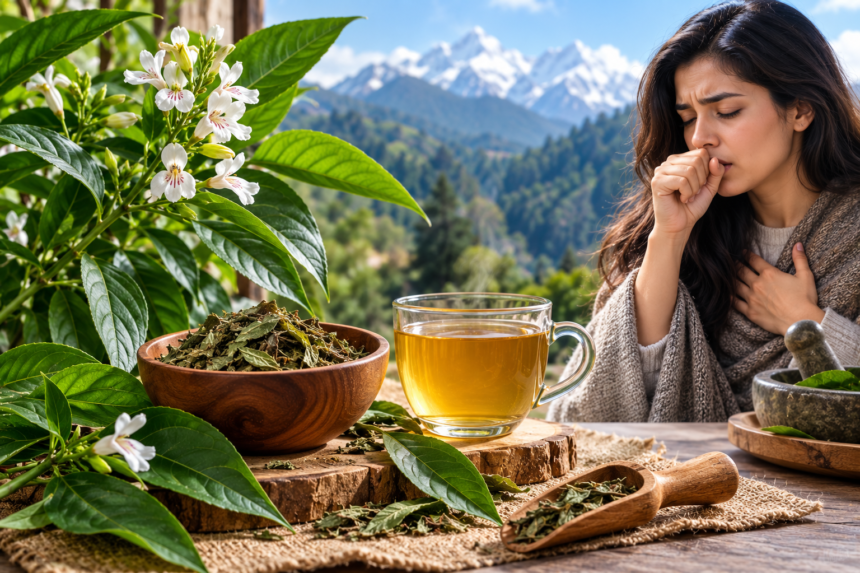
Vasaka, a well-known herb in Ayurveda, has traditionally been used for cough, throat irritation and excess mucus. Learn about its traditional uses, possible respiratory benefits and important precautions before including it in your routine.
Vasaka is a medicinal plant traditionally found across the Himalayan and sub-Himalayan regions and has been a part of Ayurvedic herbal practices for generations. Its leaves contain naturally occurring compounds such as vasicine, which have been studied for their potential role in respiratory health.
Although Vasaka has a long history of traditional use, herbal remedies are not suitable for everyone and should not replace medical treatment when symptoms are serious.
What Is Vasaka Traditionally Used For?
In Ayurveda and other traditional healing systems, Vasaka has commonly been used for cough, throat discomfort and mucus-related respiratory complaints. Preparations made from its leaves have traditionally been included in remedies intended to support easier breathing and respiratory comfort.
One of its best-known natural compounds, vasicine, has attracted scientific interest because of its potential effects on the respiratory system.
May Help With Cough and Thick Mucus
Vasaka is traditionally associated with coughs accompanied by thick phlegm or mucus. Its natural constituents are believed to support the clearance of respiratory secretions, which may make mucus easier to expel.
However, a cough that continues for a long time, becomes severe or is accompanied by other concerning symptoms should be assessed by a healthcare professional rather than treated solely with an herbal remedy.
Traditional Use for Bronchitis
Bronchitis involves inflammation of the airways and can commonly cause persistent coughing and mucus production. Vasaka has traditionally been used for respiratory complaints associated with these symptoms.
That said, Vasaka should not be considered a substitute for appropriate medical care. If bronchitis-like symptoms persist, worsen or are associated with an infection or breathing difficulty, professional evaluation is important.
Don’t Rely on Vasaka for Sudden Breathing Difficulty
Herbal remedies should never delay urgent medical attention when someone develops sudden or severe breathing problems.
Shortness of breath can have many possible causes, some of which may require immediate treatment. If breathing difficulty occurs along with chest pain, severe discomfort, bluish lips or rapidly worsening symptoms, seek emergency medical help instead of relying on Vasaka.
Vasaka Cannot Replace Asthma Medication
People living with asthma should continue taking their prescribed inhalers and medicines as directed by their healthcare provider. Vasaka’s traditional role in respiratory care does not make it an alternative to proven asthma treatment.
Anyone with asthma who is considering adding Vasaka or another herbal product should discuss it with a doctor or qualified healthcare professional first.
Why Vasaka Remains Popular in Ayurveda
Vasaka has been part of traditional Ayurvedic and Himalayan herbal knowledge for many generations. In some communities, its leaves are prepared in different traditional forms and used for cough and throat-related discomfort.
Its long history of traditional use makes it an interesting medicinal herb, but traditional use alone does not guarantee that a particular preparation or dosage is safe for every individual.
Taking More Vasaka Doesn’t Mean Better Results
Using excessive amounts of raw Vasaka leaves or homemade preparations can be risky, particularly when the appropriate dosage is unknown.
The concentration of active compounds can vary depending on the plant, preparation and amount consumed. For this reason, it is better to understand the appropriate form and dosage rather than assuming that larger quantities will provide greater benefits.
Who Should Take Extra Precautions With Vasaka?
Vasaka may not be appropriate for everyone. Pregnant women, children, older adults and people who regularly take medicines should seek advice from a qualified healthcare professional before using Vasaka.
It is also important to remember that being a natural or Ayurvedic product does not automatically mean that a remedy is completely risk-free.
The Bottom Line
Vasaka has a long-standing place in Ayurvedic tradition for cough, mucus and other respiratory complaints. While its natural compounds have been studied for potential respiratory effects, it should be viewed as a traditional herbal remedy rather than a replacement for medical treatment.
For persistent cough, severe symptoms, asthma or breathing difficulties, consult a healthcare professional before relying on Vasaka or any other herbal preparation.