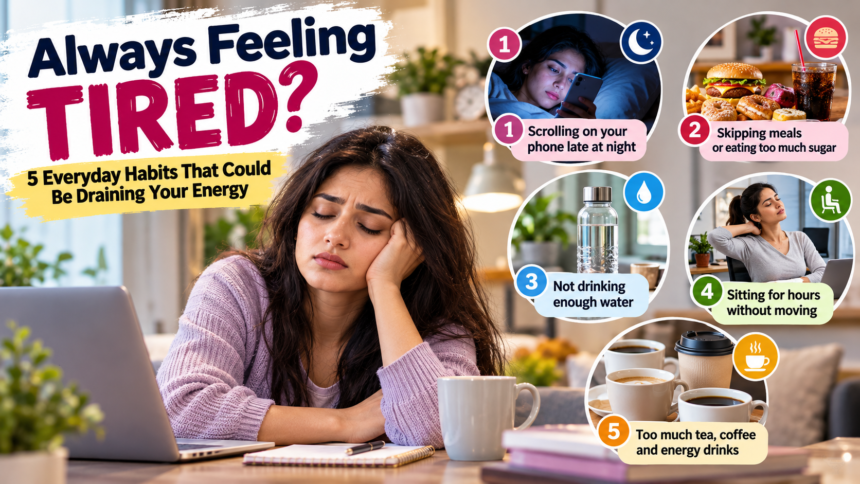
Do you wake up feeling tired even after a full night’s sleep? If your energy levels drop before the day has properly begun, your daily routine could be playing a role. From late-night phone scrolling to irregular meals, certain everyday habits can affect sleep quality, concentration and overall energy.
Occasional tiredness is normal, but persistent fatigue deserves attention. Here are five common habits that may leave you feeling drained and simple ways to build a more energising routine.
1. Scrolling on Your Phone Late at Night
Spending extra time on your phone before bed can make it harder to wind down. Bright screens and stimulating content may delay sleep and affect its quality, leaving you feeling less refreshed the next morning.
What you can do: Keep your phone aside for around 30 minutes before bedtime, follow a consistent sleep schedule and create a relaxing evening routine. Reducing notifications and keeping your phone away from your pillow may also help limit late-night scrolling.
2. Skipping Meals or Eating Too Much Sugar
Going long periods without eating may contribute to tiredness, headaches and difficulty concentrating. Sugary snacks can provide a quick source of energy, but relying on them instead of balanced meals may leave you feeling hungry and sluggish later.
What you can do: Eat regular, balanced meals that include protein, fibre and carbohydrates. Options such as dal, eggs, paneer, curd, whole grains and fruit can help provide sustained nourishment. Nuts or roasted chana are convenient snacks between meals.
3. Not Drinking Enough Water
Dehydration can contribute to fatigue, headaches and reduced concentration. When you’re busy at work or school, it’s easy to forget to drink enough fluids throughout the day.
What you can do: Keep a water bottle nearby and drink regularly, particularly in hot weather or after physical activity. Water is an excellent everyday choice, while drinks such as buttermilk and coconut water can also contribute to fluid intake.
4. Sitting for Hours Without Moving
Long periods of sitting can leave your body feeling stiff and make it harder to stay alert. Regular movement breaks can help interrupt sedentary routines and support general wellbeing.
What you can do: Stand up, stretch or walk around for a few minutes every hour. A daily walk or another activity you enjoy can also help support energy levels, mood and sleep. Start with manageable periods of movement and build a routine that suits you.
5. Drinking Too Much Tea, Coffee or Energy Drinks
Caffeine may temporarily increase alertness, but consuming too much—particularly later in the day—can interfere with sleep. Poor sleep may then leave you relying on more caffeine the following morning, creating a cycle of tiredness and temporary stimulation.
What you can do: Notice how much caffeine you consume and gradually reduce it if needed. Avoiding caffeine in the late afternoon and evening may improve sleep for people who are sensitive to its effects. Try replacing an occasional cup with water or a caffeine-free drink.