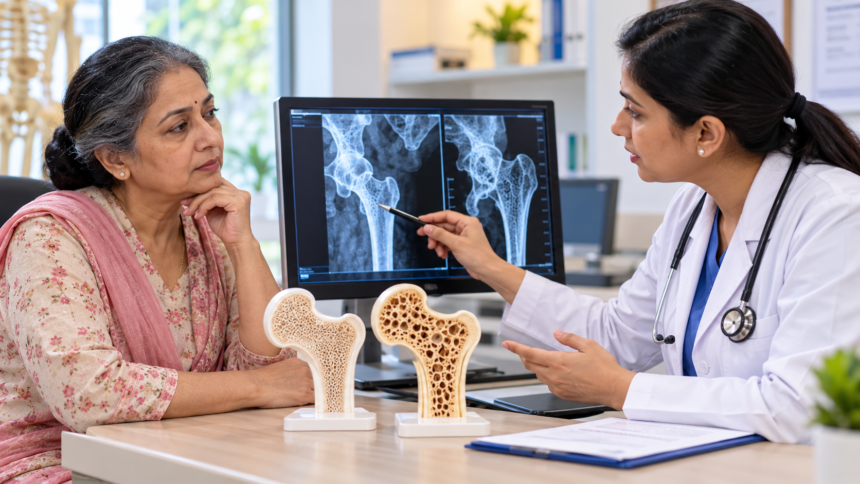
Osteoporosis is emerging as a major bone-health concern in India, particularly among women aged 50 and above. A new screening initiative aims to help healthcare professionals identify people at risk earlier, before weakened bones lead to serious fractures.
Osteoporosis Affects Millions in India
According to estimates cited by the Osteoporosis Society of India, osteoporosis affects approximately 22.9% of Indian adults, equivalent to around 33 crore people. International Osteoporosis Foundation figures indicate that roughly one in three Indian women aged 50 and older is at risk of the condition.
Around 1.4 million osteoporosis-related fractures occur among Indian women every year, according to figures cited from 2021. The condition also carries an estimated annual economic burden of ₹14,000–20,000 crore in India.
Osteoporosis causes bones to lose density and become weaker, making fractures more likely. It is often called a silent condition because people may not notice symptoms until a fracture occurs.
New Bone Health Scorecard Aims to Identify Risk Earlier
The Osteoporosis Society of India (OSI), in association with Sun Pharma, has introduced a Bone Health Score Card under its year-long Why Wait? Till It Breaks initiative.
The tool is designed to help healthcare professionals assess osteoporosis risk more consistently and identify people who may need further medical evaluation.
Doctors from several specialties, including orthopaedics, gynaecology, endocrinology, rheumatology and nephrology, may encounter patients with bone-health concerns. A common assessment tool could help improve consistency in identifying those who require additional testing.
Why Early Assessment Matters
The risk of osteoporosis rises with age, particularly after menopause, when declining oestrogen levels can accelerate bone loss. Fractures may affect mobility, independence and quality of life, especially among older adults.
Bone weakness can also occur alongside osteomalacia, which affects bone mineralisation and is often associated with calcium or vitamin D deficiency, and sarcopenia, a condition involving reduced muscle mass and strength. When these conditions occur together, treatment and recovery may become more complicated.
The World Health Organization figure cited in the report indicates that approximately 25–30% of patients who sustain an osteoporosis-related hip fracture die within a year. This highlights the seriousness of such injuries in vulnerable older adults.
What People Should Know
The new scorecard is intended to support risk assessment; it does not mean every person identified as at risk has osteoporosis. A healthcare professional can determine whether further evaluation, such as bone-density testing, is appropriate.
People concerned about bone health should discuss their individual risk factors with a qualified healthcare professional. Early assessment can help identify problems before a fracture occurs and guide appropriate care.