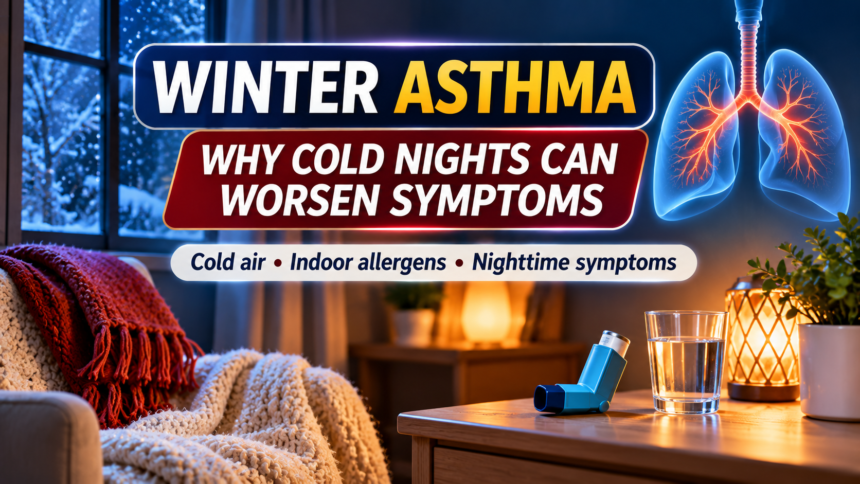
Cold Weather Can Trigger Asthma Symptoms
As winter approaches, people living with asthma may experience increased breathing difficulties, particularly during nighttime. Cold outdoor air, indoor allergens and seasonal environmental changes can make asthma symptoms more troublesome.
Doctors are highlighting the importance of understanding winter-related asthma triggers and taking appropriate precautions during colder months.
Why Asthma Symptoms May Increase at Night
Several factors can contribute to nighttime asthma symptoms:
- Cold air: Breathing cold air may irritate sensitive airways.
- Indoor allergens: Dust mites, mould and other indoor allergens can trigger symptoms.
- Nighttime body rhythms: Natural changes in the body’s functioning may influence airway activity and make symptoms more noticeable at night.
What Can Help Reduce Winter Triggers?
People with asthma should follow their prescribed treatment plans and avoid known triggers wherever possible. Keeping indoor spaces clean, reducing dust exposure and protecting themselves from sudden exposure to cold air may help.
Doctors also recommend keeping prescribed inhalers accessible and discussing worsening nighttime symptoms with a healthcare professional.
When Should Symptoms Be Taken Seriously?
Repeated nighttime wheezing, coughing, chest tightness or breathlessness should not be ignored. Severe breathing difficulty requires urgent medical attention.
Winter asthma management is important for maintaining respiratory health and reducing the risk of seasonal flare-ups.