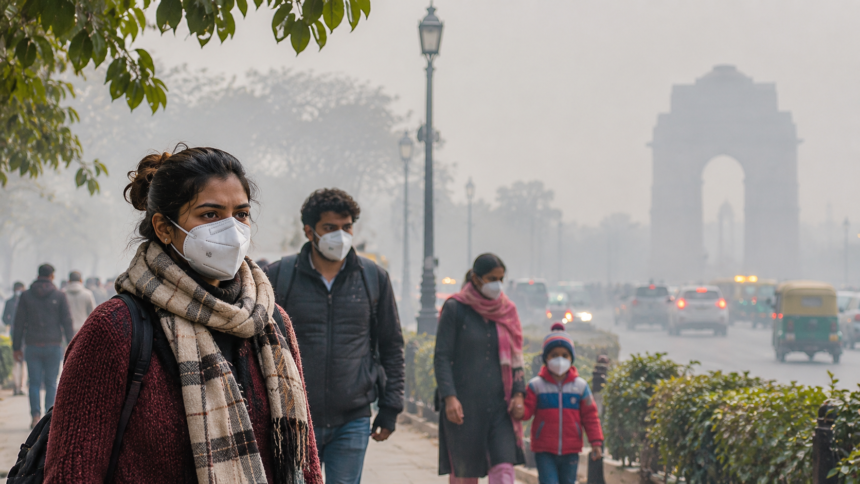
Long-term exposure to air pollution is drawing renewed attention from health experts as concerns grow over its possible role in increasing cancer risk. Fine particulate matter, particularly PM2.5, can travel deep into the lungs and may contribute to cellular damage through prolonged inflammation and oxidative stress.
How PM2.5 Can Affect the Body
PM2.5 refers to extremely fine airborne particles that can enter deep areas of the respiratory system. Some particles and their chemical components can also pass into the bloodstream.
Repeated exposure may trigger inflammation and oxidative stress, which can damage cells and their DNA. Over time, this process may contribute to changes associated with cancer development. The strongest established connection between outdoor air pollution and cancer is with lung cancer.
Research Highlights the Long-Term Risk
A 2026 evidence review examining 42 systematic reviews and meta-analyses reported that long-term PM2.5 exposure was associated with an 11% higher overall risk of developing cancer.
This figure represents a global association and should not be interpreted as the cancer risk of every person living in a polluted city. Individual risk can vary depending on several factors, including genetics, age, smoking and occupational exposure.
Why Delhi’s Air Quality Is a Growing Concern
Delhi’s winter pollution contains several sources of fine particulate matter, including vehicle emissions, biomass burning, dust and industrial activity. Secondary particles formed through chemical reactions in the atmosphere also contribute significantly.
Research analysing Delhi’s air quality between 2019 and 2023 found that daily PM2.5 levels exceeded India’s national standard on approximately 60% of measurement days.
Prevention Requires Cleaner Air
Health experts emphasise the importance of reducing long-term exposure to polluted air. Monitoring air quality, using suitable filtration indoors and taking precautions during severe pollution episodes can help reduce exposure.
However, individual precautions alone cannot solve the problem. Stronger pollution controls, better monitoring and long-term public health research are essential to protect communities.
The growing evidence highlights why clean air should be treated as an important part of cancer prevention and overall public health.